
Diving into the indie pop scene with a nostalgic twist, Giant Killers, are set to release their long-awaited debut album, “Songs for the Small Places.” Originally crafted in the mid-’90s, this collection is finally seeing the light of day, packed with melodic tunes infused with a gritty lyricism and a nod to the iconic sounds of the ’90s. In this exclusive interview with Mike and Jamie, we unravel the journey behind the album’s resurrection, the band’s experiences, and their enduring influence on the music scene.
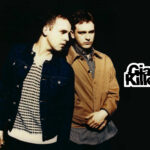 Your debut album, “Songs for the Small Places,” is a long-awaited gem that was originally intended to be released in the ’90s. Can you share the story behind the resurrection of this album and how it feels to finally bring it to the audience after nearly three decades?
M: For a long time, we considered ourselves to have been ground up by the Music Industry mill – we spent the entirety of our late teens and throughout our twenties in the back of a van, on the road, and in studios – we started our own label, then went on to have not just one but two major record and publishing deals in that period. Ultimately, we got unceremoniously dumped out of the business, essentially for not selling enough units. This was in an era with an unrecognisably different business model to that which exists today – back then, the expectation for any artist on a major label was to sell 100s of 000s of physical product in their first releases.
J: This whipping away of the carpet beneath our dreams triggered a period of reflection and re-evaluation, and inevitably disillusion. We changed our dreams, had lives outside of those narrow ambitions, had kids etc, in one sense we forgot about those older songs, even though we wrote many more new ones…
M: But this time just for the sheer pleasure of it, for the joy of creation. It was after a friend asked us to reunite Giant Killers for a birthday gig in Leeds that we were reminded of the power of those old songs when we played them live again. That was when we thought, hmmm… maybe it’s time to do something about this – to bring us to where we are now…
J: And we’re very excited to see how these songs will be received. But as we say in one of these songs, we’re older and wiser now, so we’re managing our expectations – our history in the business has imbued us with a deep layer of realism.
The ’90s sound is a significant influence on your music, and it’s making a strong comeback in today’s music scene. How do you see your sound fitting into the current musical landscape, and what elements from that era do you think still resonate with listeners today?
M: Undoubtedly, the present-day music scene, and to large extents, current fashion trends are skewed heavily to the 90s, but we wouldn’t say we are attempting to fit in with that. We’re big believers in the power of the song – the words, the melody and its combined emotive pull should rise above the way the song is produced, whatever producer, production techniques and technology were fashionable at the time a song was written or recorded.
J: Sure, the sound may reflect an identifiable era, but we truly believe a good song will always be recognised as that. We think the messages in the album, what the songs are about, and the melodies that deliver the emotive pull are universal and timeless; but we don’t want anyone to take our word for it. All we want, all we’re hopeful for, that these songs will reach the ears of the discerning listener and be given a fair chance to be loved, or otherwise, on their artistic and creative merit alone.
Your history includes opening for Blur and touring with Dr Robert and Nick Heyward. How have these experiences shaped your musical journey, and do you have any standout moments or lessons learned from sharing stages with such iconic artists?
M: Don’t trust them! Blur nicked our original keyboard player after we opened for them at a gig on Cleethorpes Pier as part of their Country House tour. A very talented musician called Diana Gutkind, who went on to tour the world with Damon and co for many years – I guess it was a valid career choice, so we don’t blame her, or Blur!
J: We also toured with Squeeze which was fantastic because we considered Difford & Tilbrook as the best song writing partnership since Lennon & McCartney. We once opened for Motown legend Edwin Starr, bizarrely with a whole host of boy bands; we also shared a stage with Boyzone at a Capital Radio Roadshow at Chessington World of Adventure!
M: This latter experience at the hilariously un-rock n roll backdrop of a theme park gave rise to a rude awakening: Our record label sent a Limo to take us to the show – the one and only time that happened to us. When we arrived at the back of the compound to slowly drive into the backstage area, it was full of screaming teens, who saw the Limo with its blacked-out windows and drew the conclusion that Boyzone were inside. It turned into pure chaos as fans started prostrating themselves on the bonnet and the roof of the motor. We got to appreciate, all be it very briefly and under false pretences, what it was like to be the subject of mass adulation…
J: But then we had to get out of the Limo! When we did, the deafening roar turned instantly to pin-drop silence, and after a couple of seconds, as we stood looking at the gathered multitude and they at us, a lone, adolescent voice enquired… who the f**k is that!? From such experiences it’s tempting to say we’ve learned valuable lessons in the art of live performance, and in the craft of song writing. That is true to some degree, but our biggest lesson has been in the cultivation of the quality of resilience.
The decision to donate a portion of Bandcamp sales to the Campaign Against Living Miserably is commendable. Can you elaborate on why this cause is significant to you, and how do you believe music can contribute to raising awareness and supporting important social issues?
M: In Brighton where I live, there seems to be a lot of young bands willing to stand up for good causes and to write about them in their work. There’s a great club night I’ve been to a couple of times called Agitation; it’s at the locally revered Green Door Store, and I’ve seen amazing young bands such as The Damn Shebang, and the fabulously named Joe Perfect and the Champagne Socialists giving their time and energy to raise money to help striking nurses with their food bills, or helping catering industry workers campaign for a decent wage. In my formative years there were campaigning movements such as Rock Against Racism and Red Wedge, in which mainstream bands were politically engaged, but that fell away for some time. I’d like to think we’re seeing a re-emergence of that kind of thing, perhaps as a response to the difficult times we’re living through.
As far as mental health goes, like CALM, we’re against living miserably – poor mental health is often an unwanted bedfellow with creative people. Look at the very public developments last year with Lewis Capaldi for instance. If people who need help, don’t get the right signposting, advice, or counselling, then that is potentially fatal. You know, 1 in 5 of us will harbour suicidal thoughts over the course of a lifetime – CALM is getting that fact out into the open, to destigmatise the conversation around suicide so that we can all talk about this at a societal level. Everyone should support that ambition.
With a diverse background that includes Glastonbury and Proms in the Park, what unique aspects do each of these musical experiences bring to your artistic expression, and how do they contribute to the rich tapestry of Giant Killers’ musical journey?
J: In one sense, they are a validation, because they are the sorts of experiences that you dream about at the outset of your journey as a musician, but at the same time, we didn’t do either as the headline act, but as jobbing musicians. For Glastonbury, we were both part of a dirty jazz, swing, big band collective called The Kingsize Five – as such we weren’t playing the Pyramid Stage but a collection of smaller stages there – multiple gigs over the course of the festival in both 2008 and 2009. So, while we didn’t get helicoptered into the backstage enclosure, we did stay in artists camping and got to use the open air jacuzzi they have in there (yep, its true), every night.
M: Proms in the Park is a great case study in the life of a jobbing musician and its pertinent to the tribute scene – which gets a lot of stick from so called serious musos, but the scene has undoubtedly kept the wolf from the door for a lot of talented musicians who may otherwise have starved! I opened as the sax player for the heavy gigging Madness tribute band, One Step Behind. We were the warm-up for Lionel Richie when he headlined Proms in the Park in Hyde Park – I think this was 2009. As we were on early around 530pm I wasn’t expecting a full house, but when I walked out there where 55,000 very enthusiastic people in front of that stage.
J: There’s a fabulous little story from when Mike was using the backstage gents, when who should join him at the adjacent urinal than the great man himself…
M: Ha yes, to break the silence, I made an enquiry as to which song Lionel would be starting his set with. When the former Commodore replied with his own question – what would you recommend, I made a lame attempt at wittiness with an observation that Dancing on the Ceiling should perhaps be avoided given it was an open air gig. Lionel left without saying a word, shaking his head as he retreated to his green room.
J: These experiences are a case of so near yet so far in terms of what our musical dreams were at the outset, versus what they actually where in real life. But it’s all an opportunity to grow as a musician, a songwriter and a human being!
M: Ha ha… maybe!
Support Giant Killers on Bandcamp here.