Browsing Category

Hard Rock Music Promotion & Blog

Self-Implode by The Elegant Chasers Crashed 90s Indie Nostalgia into Industrial-Metal Catharsis

The Elegant Chasers

Would a 90s nostalgia-drenched, synthy indie-rock track titled Self-Implode be complete without a nu-metal-esque aural curveball breakdown? Probably not; it becomes the pièce de résistance in The Elegant Chasers’ latest earworm, which grooves from a mash-up of Mansun, Kula Shaker and Happy Mondays aesthetics into a gnarled visual depiction of what internal self-implosion should sound like.

Behind The Elegant Chasers is a DIY multi-instrumentalist and programmer with a fixation on 80s and 90s indie, alternative rock, grunge, Britpop, new wave, electronic rock and industrial metal, and Self-Implode makes every one of those reference points feel combustible rather than curated. The serotonin pours from sticky-sweet polyphonic synths and angular guitar grooves until the track starts mutating against itself.

Then restraint slips away from the harmonies, the guitars sound like they have been tuned in the seventh circle of hell, and the middle eight ties the juxtaposition together with a soul-stealing guitar solo that introduces a Static-X-reminiscent outro. The result is indie euphoria getting dragged through its own nervous system.

If you have felt alienated at boiling point as of late, Self-Implode is absolutely the single to make you embrace the heat collectively. It’s the ultimate call to arms; why should we watch the world burn without bringing a little fire of our own?

Self-Implode is now available to stream on all major platforms. Support the artist by purchasing the single on Bandcamp.

Review by Amelia Vandergast

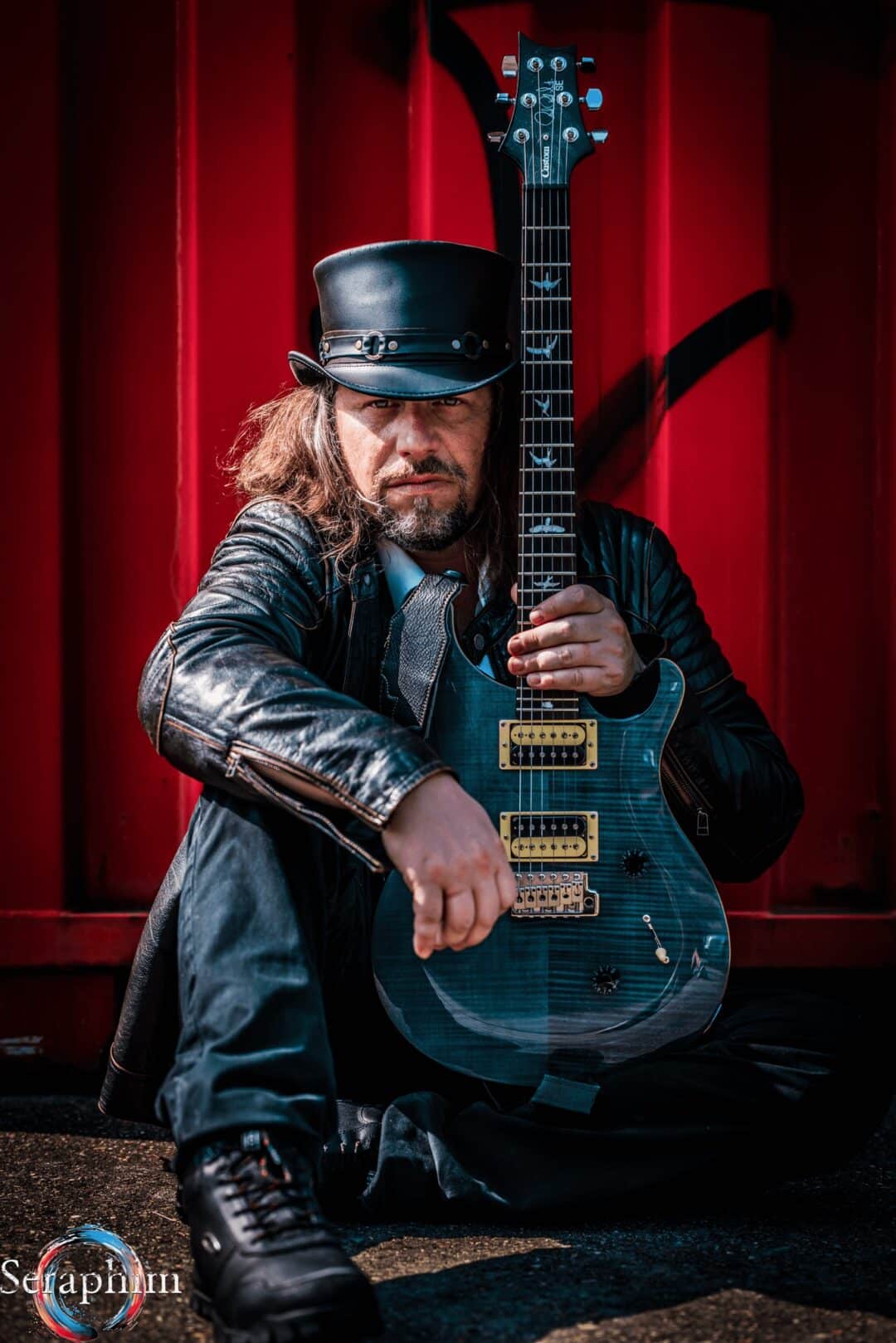
No Name by Filip Vincek Is Guitar-Driven Rock with Power-Metal Soloing and Classic-Rock Muscle

Filip Vincek’s rock instrumental, No Name, is one of the rare guitar-driven releases that would be blasphemous to vocalise over. The Croatian guitarist, born in Varaždin and classically trained through the Academy of Music at the University of Zagreb, brought a serious technical foundation to a track that still feels viscerally instinctive and gloriously unrestrained.

After starting as a crunchy, overdriven ode to classic rock, No Name unveils itself as an epic saga told through pick-ups, with a level of rhythmic intuition that feels practically alchemic. Far beyond an average tableau of riffs over a rhythm section taking a backseat, Vincek treats the guitar as narrator, protagonist and final weapon, letting tone, phrasing and attack carry the emotional weight.

His résumé already makes the case for his command: collaborations with major Croatian artists, work across television productions and performances with the Zagreb Philharmonic Orchestra, the Croatian Radiotelevision Symphony Orchestra and the Orchestra of the Croatian National Theatre. His 2026 Status Award as Guitarist of the Year in the Pop-Rock and Popular Music category feels fully justified here.

On No Name, Vincek riffs as ferociously as a power-metal player; Herman Li himself would struggle to make that solo feel more incendiary. Filip Vincek is an interesting take on the modern guitar hero: technically immaculate, theatrically charged and never sterile.

No Name is now available to stream on all major platforms, including Spotify.

Review by Amelia Vandergast

Download’s Future Bill Starts Here: Black River Renegade’s Next Mistake Is Blues-Rock at Its Hardest Hitting

Any playlists featuring Highly Suspect, Royal Blood and Rival Sons would be remiss to look past the latest hard-rock hit, Next Mistake, from Black River Renegade. The Norwich four-piece have taken their modern approach to bluesy hard-rock riffs and sent a rampage across the UK rock and metal scene; Next Mistake alone carries enough force to raze the stagnating monotony of the circuit to the ground.

In the red-hot hit, which becomes a battle of will between sirens and sense, you can hear the seductive serpentine roots of hard rock under the sleek amplification of crashing drums and low-slung basslines. Black River Renegade honour classic-rock influence without embalming it, bringing the form forward through pornographic guitars, sharp songwriting chops and hooks that land straight in the sternum.

Following a busy 2026, including support for A Thousand Horses at Norwich Arts Centre, sets at the Royal Norfolk Show and Aldeburgh Festival’s Big Day Out, plus bookings for HMV Live & Local and the John Peel Centre’s Emerge night, the band’s live reputation is clearly catching up with their recorded output.

If Download Festival ever dared to look past legacy and novelty acts for the top of its bill, Black River Renegade would be a fitting charge into the future of rock.

Next Mistake is now available to stream on all major platforms, including Spotify. 

Review by Amelia Vandergast

Mitch Freimark Plugged Southern Hard Rock Straight into the Soil with ‘Liv’n Off the Dirt’

Mitch Freimark dug deep into the trenches of Southern hard rock reverence for his latest single, Liv’n Off the Dirt. Blazing past high-octane rock to deliver a hypersonic blast of augmented blue-collar blues, Mitch Freimark blurs the lines between Americana and the hard rock anthem with the kind of force that demands volume.

With super-charged riffs, a snarling rhythm section and a voice so powerful it is scarcely believable that it belongs to someone on this mortal coil, the track becomes a commanding release for anyone who knows the resilience needed to withstand the toll of toiling the earth for a living. It hits like dust in the lungs, sun on the neck and pride refusing to bow beneath another brutal day.

Freimark’s own history gives the single a higher voltage. He first took a guitar to the stage at 15, after close friend Boyce Bender convinced his mother to let him play a VFW gig in Gettysburg, South Dakota. Decades of writing, playing and storing songs that needed to be heard eventually led him to AI vocalist Cade Nichols, the voice he felt could finally breathe life into them.

Liv’n Off the Dirt is now available to stream on all major platforms, including Spotify.

Review by Amelia Vandergast

STEVE W BOILY Turned Romantic Ruin into an 80s Power-Ballad Hurricane with ‘CAN I TRUST YOU WITH MY HEART AGAIN’

CAN I TRUST YOU WITH MY HEART AGAIN, the latest visceral pop-rock hit from the master of heart-in-throat productions, STEVE W BOILY, is as high-octane as a hurricane. Performed by guest vocalist Ian Hardwick, the anthemic power ballad tears you right back to the theatricality of 80s rock, where fog-smattered production, soaring wildcard solos and build-ups of pure emotional tension all prise you into the escapism of romanticism.

The track captures the emotional war between longing for love and fearing another devastating betrayal, turning a question of trust into a widescreen rock confession. Boily writes from the point where heartbreak has already left its mark, yet desire still claws back towards the possibility of being cherished.

The ABBA-esque refrain, carrying the same earworm appeal as Lay All Your Love On Me, is the cherry on the aural cake for this infectiously high-voltage hit. STEVE W BOILY has long drawn from the classic rock force of the 80s and 90s, building theatrical songs with weight, visual drama and emotional scale. Here, he takes a current of uncertainty and augments it into a clarion call for the romantically scorned with reverence for rock.

CAN I TRUST YOU WITH MY HEART AGAIN is now available to stream on all major platforms, including YouTube.

Review by Amelia Vandergast

Peter Hulburt Fired 80s Rock Reverence Through Retro-Futurist Doom in ‘Project 5’

Peter Hulburt initiated a session of sludgy stoner doom rock with his interstellar instrumental, Project 5. The distortion-heavy intro instantly sets a foreboding atmosphere, the production opening into a cavernous expanse of thrumming discordance until the glow of the amps starts to burn red hot.

From there, Hulburt flexes his fret-wielding muscles before launching an all-out attack of raw, rhythmic riffs and grooves, firmly planting the guitar lead work in the reverence for 80s rock, while the production gives the release a hypersonic sense of retro-futurism. Project 5 feels forged for rock fans who want adrenaline along with adoration over what is possible with six strings and sparks of electricity under the touch of an artist who knows exactly how to conjure an aura of raw rock rebellion; devout rock fans will undoubtedly allow Project 5 as something holy.

Raised in State College, Pennsylvania, Hulburt has spent eight years falling further into guitar, shaped by the kind of lifelong listening that turns influence into voltage. Jimi Hendrix, Mötley Crüe, Dire Straits and Pink Floyd all leave fingerprints across his appetite for expressive lead work, while his respect for hip-hop gives his timing an added bite.

Project 5 is now available to stream on all major platforms, including Spotify.

Review by Amelia Vandergast

Nomad Zero’s Padded Room Is Sludgy Hardcore Therapy for Anyone Sick of Polished Aggression

If Deftones, Mudhoney and Pantera had a three-way which resulted in an aural lovechild that was bitten by a rabid raccoon, it would be the sludgy mirror image of Nomad Zero, who could never be accused of posturing their aggression. Their latest single, Padded Room, practically convulses with angst as it toys with the hallmarks of grunge, hardcore, and grindcore, resulting in a salaciously vehement, cathartically visceral session of annihilation.

Padded Room has the kind of loose-limbed violence that feels dangerous because it breathes, bucks, and throws itself against the walls. It has no interest in being as tight as a straitjacket, because its real force comes from where the seams strain, split, and let the rawness spill out. The guitars snarl with swamp-thick distortion, the rhythm section lands like furniture being hurled across a basement, and the vocals sound ripped from a nervous system running on pure threat response.

The Northwest Indiana band are already building a reputation as a live act that leaves rooms feeling altered, and releasing their premiere single in the same week they open for The Bunny The Bear is a clear sign that there’s little that could get in the way of this juggernautically unreckonable force as they refine rage with feral resonance.

Padded Room is now available to stream on all major platforms, including Spotify.

Review by Amelia Vandergast

Cody Hyde – Final Ending: a Metalcore Juggernaut with Stadium-Sized Survival Scorched Through It

Stadiums should be scrambling to prepare themselves to host Cody Hyde, a revolutionary of metalcore and hard rock fusionism whose ability to augment overdriven amplification feels seemingly infinite. His latest release, Final Ending, featuring Marko Duplisak, is a harbinger of melodically juggernautical visceralism, reinforced with the kind of raw emotion that hits hard enough to leave you with a concussion.

Resonating as a refusal to sink into the clutches of absolute nihilism, Final Ending becomes an exposition of how we will meet final endings in our lifetimes, but none except the final ending deserves apathy. Cody Hyde turns that premise into a full-throttle statement of defiance, placing melodic hooks beside blast beats, serrated guitars, and Lamb of God-esque screamo vocals that tear through the verses with razor-sharp teeth.

For fans of Bullet For My Valentine, Metallica, and Five Finger Death Punch, the single carries the scale, muscle, and melodic instinct of arena-ready metal. Hyde, a guitarist and composer from Milaca, Minnesota, has been building towards his second studio album, Songs For the Broken, with tracks rooted in personal struggle, toxic relationships, and a broken world. Here, the soaring hard rock choruses hook themselves inside your throat while riffs strut as salacious guitar porn, making ambivalence impossible.

Final Ending is now available to stream on all major platforms, including Spotify.

Review by Amelia Vandergast

Suicide Star Interview: Meet the Band Presenting an Inferno to Hard Rock Instead of Holding a Candle To It

Canadian heavy rock outfit Suicide Star shaped their pressure cooker of an LP, Generation Doom, with the weight of social pressure, isolation, uncertainty, resilience, and the art of staying emotionally alive in a world that keeps turning the volume up. In this interview, the band unpack how the album grew from observation, personal reflection, and the collective strain facing younger listeners, while still carrying hooks, force, and a refusal to sink into defeat. They also speak frankly about the realities of Canada’s original rock scene, the fight for space outside the mainstream, opening for Gene Simmons in Niagara Falls, and why audiences across Europe, Asia, and the UK still seem to understand the lasting electricity of darker, heavier music.

Generation Doom is a heavy-hitting title. What made those two words feel right for this new album?

The title really came from the themes that naturally started showing up across the whole record. As we were writing the songs, we noticed a common thread about the challenges younger people are facing today — things like social media pressure, isolation, and the constant noise that can make it harder to feel confident or connected. But the album isn’t meant to be a negative statement about this generation at all. If anything, it’s about recognizing those struggles while also admiring how resilient people have become in finding their own path through it all. Generation Doom just felt like the right way to capture that tension between uncertainty and hope.

When you were putting the album together, did you feel like Generation Doom became a statement about the world around you, the band’s own headspace, or the energy you wanted listeners to walk into?

I think it’s definitely a combination of all of that. We’ve always written our songs from a place of observation and our own personal perspective on certain ideas, experiences, and events happening around us. With Generation Doom, a lot of the themes came naturally from just looking at the world people are trying to navigate right now and how that affects us personally as writers and musicians.At the same time, we didn’t want the album to feel hopeless or overly heavy in a negative way. There’s a lot of emotion on the record, but there’s also energy, honesty, and a sense of pushing through difficult things rather than giving in to them. I think that balance became a big part of the album’s identity. We want listeners to feel understood when they hear these songs, but also energized by them. That emotional mix of frustration, reflection, and resilience is really what defines Generation Doom for us

What can fans expect from the new music in terms of sound, mood, and lyrical themes, especially for anyone discovering Suicide Star for the first time through this album?

I think they can expect a much rawer and heavier sound from this record compared to our last release. We really pushed ourselves musically to make the songs feel bigger, more emotional, and more intense without losing the melodic side that’s always been part of Suicide Star. There’s a darker atmosphere throughout the album, but it still has a lot of energy and hooks to it. We wanted the music to feel honest and unfiltered, almost like you’re hearing exactly where we were mentally and creatively while making it.

Canada has such a huge musical identity, but the original music scene can still be brutal for bands trying to be heard. What has your experience been like trying to build momentum with original material?

It’s definitely been a hard road. The industry in Canada today, especially for heavier rock bands, isn’t the same as it was twenty or thirty years ago when all those bigger rock bands came out. Just trying to get a single live show nowadays is extremely difficult unless you’re opening for a well known act or you buy your own show and sell tickets. It’s definitely a lot of ‘who you know.’ We’ve been fortunate in that our industry connections have allowed us to play some pretty cool shows, including opening for Gene Simmons at the OLG Stage in Niagara Falls in front of five thousand people. We taped that show and fans can check that out on our Youtube page.

Do you feel Canadian bands making heavier, darker, or more alternative music have to fight harder for space than artists working in more mainstream lanes?

Absolutely. It definitely feels like heavier or more alternative bands have to fight a little harder for attention right now, especially in Canada. At the moment, genres like country and more mainstream pop seem to dominate a lot of the spotlight, and honestly, I think the same thing is happening in the U.S. as well. Rock music just isn’t sitting in the same cultural space it did during its peak in the ‘80s and ‘90s when rock bands were everywhere in mainstream media. That said, I don’t think rock is dead at all — it’s just changed. A lot of the scene has moved into more independent spaces where bands really have to build things from the ground up through live shows, social media, and connecting directly with fans. In a weird way, that can make the community feel more genuine because the people supporting heavy music are usually really passionate about it. For bands like Suicide Star, it means you have to work harder and wear a lot more hats than artists in bigger mainstream genres, but it also pushes you to be more creative and authentic. At the end of the day, people still connect with honest music that has energy and emotion behind it, and I think there will always be a place for rock music because of that.

Your style of music still has a strong following, especially across Europe and parts of Asia. What do you think those audiences understand about this sound that keeps it feeling alive and relevant?

That’s a great question! We think Europe and Asia have held onto a much stronger culture around rock music, especially when it comes to live shows and fan loyalty. In a lot of those countries, rock bands are still treated like major events, and fans really invest themselves in the music long term. There’s a deep respect for musicianship, live performance, and the identity that comes with being part of a rock scene. In North America, musical trends seem to move a lot faster, and the industry has shifted heavily toward genres that perform well on streaming platforms and social media. A lot of the culture around music has been lost here. We love that that culture is still alive and well, especially in the U.K. We want to try and tap into that energy!

Have you noticed different reactions from fans in Canada compared with listeners overseas, particularly when it comes to the heavier atmosphere and attitude behind Suicide Star?

Definitely, yes. I think it ties into what we were talking about before with how different parts of the world still have a really strong culture surrounding rock and alternative music. In places overseas, fans seem more willing to embrace heavier bands and really dive into the atmosphere and emotion behind the music. There’s a real openness there to discovering new rock bands and giving them a chance. In Canada, I think audiences can sometimes take a little longer to warm up to something heavier, especially when you’re an independent band trying to break through in a music landscape that leans more toward mainstream genres. But honestly, one of the most rewarding things for us has been seeing how genuine the reaction can be once people connect with what we’re doing. A lot of the bigger shows we play are in front of crowds that came to see the headliner and probably have no idea who Suicide Star is when we walk on stage. That’s always a challenge, but it’s also exciting because you really have to win people over in real time. And usually by the end of the set, you can feel that shift happen. People who may not have expected to connect with the band are suddenly engaged and reacting to the energy. When we walk off stage and see people coming up to talk to us or checking out the merch table, that’s when we know we got through to them. Those moments honestly mean a lot to us because they feel earned.

What do you want this album to say about who Suicide Star is right now? And where is the band heading next?

I think more than anything, we want people to know that nothing we do is fake. Everything about Suicide Star comes from a place of raw honesty, emotion, and passion. We’ve never been interested in chasing trends or trying to sound like what’s popular at the moment. The music has always been an outlet for us to express the things we genuinely feel and observe, and I think Generation Doom captures that better than anything we’ve done before. This album feels like a big step forward from Isolation, our first record. That album was much more inward and personal, whereas Generation Doom expands outward and reflects more on the world around us and how people are trying to navigate it. The songwriting feels more mature, more confident, and more focused in terms of what we want to say as a band. We’re still writing from personal experience, but now those experiences are connecting more with larger themes that a lot of people can relate to. As for where the band is heading next, I think this record really sets the tone for the future of Suicide Star. We want to keep pushing ourselves creatively, making heavier and more emotionally impactful music, and reaching bigger audiences both here and internationally. More than anything, we just want to continue building something real that people can connect with in whatever way feels good to them.

Discover Suicide Star on Spotify.

Interview by Amelia Vandergast

Hard Rock Heavy Hitters, Forever Vendetta, Fired Smoking Gun Resilience into ‘Not Dead Yet’

The South Wales quartet, Forever Vendetta, is a diamond in the hard rock rough, taking after the hardest substance known to man, glinting as an unreckonable spectacle in the UK alternative circuit. In their latest single and music video, Not Dead Yet, the riff-propulsed masters of visceralism laid down percussion that would give you whiplash if you attempted to follow; the juggernaut of a salaciously serpentine anthem is a dizzying rabbit hole of hypersonic adrenaline, cut through by the searing synthesis of spite and fortitude the lyrics are forged from.

If you’ve ever been counted as down and out, Not Dead Yet is a reckoning worth partaking in; it’s a fresh wave of resilience shot from a smoking gun; a Velvet Revolver, if you will. The instrumentals are tighter than a straitjacket under the helm of the vocals; you can almost hear the airwaves tremble under their command.

There is a loud, no-frills ferocity to the track that speaks volumes of a band that knows exactly how to make impact feel physical, while the hook-driven charge keeps the single surging forward with bruised knuckle determination.

Since forming in 2008, Forever Vendetta have built their reputation in South Wales and beyond by sharing stages with established heavyweights and doing things on their own terms. Following their self-produced debut album New Day Rising, Not Dead Yet lands in 2026 as an uncompromising return fired by attitude, energy, and a refusal to be written off.

Not Dead Yet is now available to stream on all major platforms. For the full experience, watch the official video on YouTube.

Review by Amelia Vandergast