
Browsing Tag

Mario Deschênes

OneSelf Wires Time into the Rock n Roll Console – An Interview with Mario Deschenes

Versions 'N' Not 8 by OneSelf Featuring Mario deschenes
In his latest conversation with us, OneSelf – the moniker of Mario Deschenes – lifts the curtain on his eighth album Versions ‘N’ Not 8 and the unflinching commitment it took to bring every beat, lyric, and mix to life single-handedly. Far from the well-trodden path of collaboration, Deschenes carves out his sound in total solitude, channelling each layer of his music through an uncompromising lens of personal discipline and emotional intent. The interview offers a rare look at how independence has sharpened his creativity rather than isolating it, as he reflects on his discography, explains his recording rituals, and hints at where his muse might take him next. With reflections on grief, growth, and the endless pursuit of innovation, this interview is a meticulous unpacking of artistic willpower and a refusal to stagnate.

OneSelf, thank you once again for talking to us. Last time, you gave us a fascinating insight into the creation of Seven Eleven. This time, we’d like to know more about your process and your artistic independence.

It’s a pleasure to talk to you about my most recent album, Versions ‘N’Not 8.  The Seven Eleven album was quite a journey.
You want to know more about my creative process and artistic independence. Wow It’s an answer of a lifetime, and I’ll try to describe my musical world as best I can.

You are the sole musician and producer on your albums, which is a remarkable feat. What are the biggest rewards and challenges that come with taking full creative control over every aspect of your music

Thank you for saying it’s a remarkable feat, but I don’t think so, I have as my source of motivation, if I don’t do it, there’s no one to do it.  If I don’t do it, there’s nobody to do it for me.
My greatest satisfactions are when I write a good text, create the music that goes with the lyrics, record it with the sound I want, with the arrangements that support the song. When the song is finished and I feel I can’t improve on it, then comes a moment of pride, which is short-lived. Because I remember a phrase from one of my creative teachers who said you’re as good as your last creation. If your song is good, well done, what about the next one?
 
While one of the greatest challenges of creative mastery is to continue to be creative after 8 albums, because I don’t want to repeat what I’ve already done, I’m always looking for what can be different, what will be different.
I’ve already started putting together songs for the next album, and I think I’ve figured out what it’s going to be about.
This search, which I’m talking about, starts with the writing, not repeating a way of doing things, a way of saying things, even if I’m not going to repeat myself.

When you are working on a track, how do you approach balancing the different roles — from songwriting to arrangement, performing, recording, and mixing — without external collaboration?

How do I approach balancing different roles? Well, I take on each role, one after the other.
When I write, I am a writer. I decide the text is good, and then I head to the studio to find the right drum rhythm to accompany the lyrics, the guitar sound, the interpretation of the words, and the emotions I want to convey. At this point, I become a guitarist, singer, and programmer in addition to being a writer. This is when I modify the lyrics
I’m in service of the song, making it the best it can be. I start by recording the drums. Once that’s done, I record the voice and the guitar simultaneously. The voice will be re-recorded later in the creative process. Then comes all the other instruments and arrangements.
Once the song is complete with mastering, I redo the final mix as many times as necessary until the song feels perfect.
All this is done without any external collaboration. Over time, I had to adjust to this approach, perhaps because I don’t like waiting—waiting for someone else to be ready. Plus, the time spent waiting could be used for something else. So, I learned to work independently in order to achieve the best possible quality for my songs. I must play different roles  for my songs, but I love it.

As the only musician on your albums, you must develop a distinct connection with each song. How do you decide when a track is truly finished and ready for release?

 Yes, I do have a certain connection with my songs, since I write them. Not all the songs I write are recorded. When it comes time to select the songs, I reread the lyrics as if I were not the one who wrote them. If they move me, appeal to me, and the theme resonates with me, I choose them. They then join other texts for a second selection.

Then comes the day of recording the album. Which song speaks to me the most? It’s a matter of feeling. Often, it is the lyrics that resonate with me the most. After that, the creative and recording process begins, all the way to the final mixing.

Once finished, I listen to the song on the living room sound system. If it sounds good, it’s fine. If something feels off, I investigate what might be wrong. If it’s the mixing, I rework it. If it’s good, the voice is clear, the instruments are well-balanced in the mix, and the song still appeals to me, that’s a good sign.
The next step is to listen to the song in the car with all the ambient noise while driving. If the song still pleases me, then I can say it’s finished and ready to be part of the album.
All these steps take time. And it’s the best way to have the best possible songs.

In what ways do you think your albums carry a unique signature because of your solo approach compared to records produced with full bands or external producers?

 It’s a difficult question because, so far, all my albums bear my signature at every step, through the entire creative process. I don’t know what happens in other bands; I can only imagine based on what I’ve read on the subject.
What is certain is that I make all the decisions, and I take full responsibility for them. If the album turns out well, I’m the one responsible, and that’s great—I appreciate it. If the opposite happens, I also take full responsibility and tell myself I’ll do better next time. I listen to what others say and see if I can improve certain aspects for the next album or song. If, however, it’s an artistic choice and someone suggests an approach I hadn’t thought of, I’ll definitely try their idea on another song.

Since I am the sole orchestrator of my albums and feel that I improve with each one, and since I have more ideas to try out, my method can’t be all that bad. I don’t know any other way to make an album besides the way I do, but what saves me is that I don’t want to repeat the same formula. I’m always looking for another way to make music, to write it, record it, and mix it.

I know there are still other aspects to explore.

Over the years, how has your independence shaped the evolution of your sound and recording techniques? Are there any moments in your discography that particularly stand out to you as milestones in your growth as a solo artist?

 When I look back on my past years, it’s clear that they have shaped my evolution, whether in writing or in the recording process. I was—and still consider myself—to be learning. I’m still learning and know that this journey won’t end with the next album.
I must say I started recording with a 4-track cassette recorder, then an 8-track cassette recorder, and later moved to digital, and so on. I have never stopped learning.
It took me years to trust myself and to embrace the fact that I am a songwriter, composer, performer, guitarist, singer, sound engineer, arranger, director, and producer.
Looking back, I understand that each song leads to another song, and each album leads to something different on the next. In the early albums, the songs marked my creative path and my journey of growth. For me, there was a turning point starting with the third album, Traces. There are very good songs on that album, but the fourth, Portraits of a Confidence Door 4, marked the biggest shift. It was an album I made after the death of one of my brothers, as a tribute to him.
The fifth album, Unicitude, was an album of freedom where I explored new aspects of creation. The sixth, Atypical So (A) Typical, felt like the most polished and refined album—at least that’s what I thought at the time.
Then came Seven Eleven, where I poured everything I had learned up until then into what I believe are very good songs.
Finally, my most recent, Versions ‘N’ Not 8. I thought the sixth would remain the most complete, but I was wrong. This album truly lives up to its name. The songs are multiple versions, at every stage of creation, resulting in the best final versions of each song.
From the fourth album to the eighth, these are records that reflect a departure from my earlier approach to albums.
I wouldn’t have been able to create Versions ‘N’ Not 8, my most recent, without making the ones before it. When I look at the songs now, I see the growing confidence that has taken shape and continues to develop.
I know what I’m capable of creating and where I’m headed. I’m already excited for what’s to come.

Since your music is entirely self-created, what does your songwriting environment look like? Do you have specific rituals or habits that help you stay creatively focused when you’re building an album from the ground up?

 My writing environment, at least at home, always includes a stack of paper and a pen, just in case… I don’t have any specific ritual to speak of. Inspiration can strike while reading a book, watching a show, having a conversation, or during a family dinner—or not.
Life in general provides me with plenty of inspiration;
however, it’s up to me to find the angle from which I want to approach what has caught my attention.
It’s up to me to write it—or not…

What new themes, sounds, or challenges are you aiming to explore in the future?

 I know that for my next album, I want to explore the theme of Time—the evolution of time and how it changes our lives. I’ll see where this idea takes me.
It’s possible that I might completely change direction, but one thing I do know is that I want to keep having fun with sounds and offer the best songs and videos I can create.
I want to stay connected to the music world in general, keeping up with new trends.
I aim to continue evolving musically, to provide you with the best lyrics and music you deserve.
–
Stream and purchase the latest LP from OneSelf via Bandcamp.
Interview by Amelia Vandergast
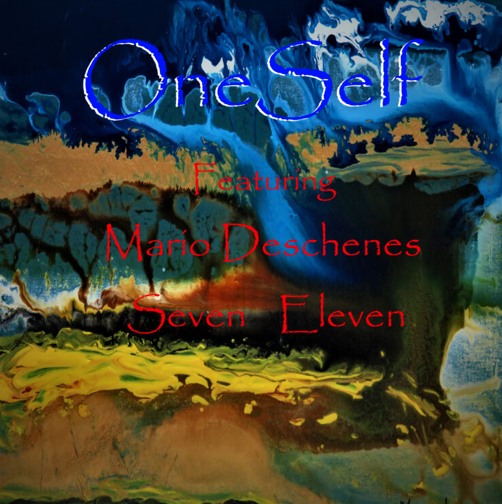
Mario Deschenes as OneSelf Set Soul Spinning Through 60s Psych Rock Kaleidoscopes in ‘Unicitude’

Versions 'N' Not 8 by OneSelf Featuring Mario Deschenes

OneSelf’s latest seminal release, Unicitude, which translates to ‘Unique Link’, swings rock back into the 60s as so much more than a sonic pitstop; it’s a reincarnation of the shaking, rattling, rolling kaleidoscopes of soul that sparked a movement still reverberating with momentum 60 years later. With a garagey rock production giving the track a raucous bite and psychedelic carousels of colours contouring through the harmonised melodies, it’s impossible not to get in the groove with Unicitude. The vocal presence is a dualistic dream; there’s no tearing the rock renegade energy from the lyrics, regardless of the sticky-sweet proclivities that envelop the performance.

OneSelf created Unicitude as a force that reconnects the soulful rawness of yesteryear with the imagination of the present, setting a new standard for how rock and soul can collide and reawaken.

Mario Deschenes, the mastermind behind OneSelf, is a multidisciplinary artist who has spent over four decades weaving his authentic and original creativity across music, painting, and videography. With seven albums released under his name and another set for release in September 2025, Mario’s music is an extension of his visual art, infused with the same vibrant essence. His catalogue spans over 91 songs and 42 videos, a testament to his enduring commitment to artistic expression through every medium he touches.

Unicitude is now available to stream on all major platforms, including Bandcamp. 

Review by Amelia Vandergast

In anticipation of OneSelf’s seventh album, we sat down with musician & producer Mario Deschenes to delve into the inspiration that led to his prolific ever-evolving creations.

Mario Deschenes

After delving into the nostalgically colourful haze of his former psych-pop albums, we were desperate to know the direction of Mario Deschenes’ new album that is currently in production, and how his journey as a multi-instrumentalist singer-songwriter and producer started.

–

Thanks for sitting down with us to discuss your latest album, Seven Eleven; what can your fans expect from your 7th LP?

First of all, let me thank you for this interview. What my fans can expect is, it’s gonna be more than expected; they will get 12 songs and 12 videos. I have to tell you this album is not completed yet; today, I almost finished the 11th one; if I can complete this song as I think it gonna be a great one.

Yes, 12 songs and 12 videos, with a deeper implication from the lyrics to the final mixing. I was more attentive to each step and I took my time to have the best songs I could get. I think my fans will be surprised; they will hear Rock songs for their pleasure. I’m sure they will hear an evolution in this album if they compare it with my other albums.

For your new fans, how did your venture into music begin, and where has the expressive venture taken you?

My musical journey into music began with Can’t Buy Me Love, a world of possibilities hit my mind, and that is what I tried to go with since that moment.

My biggest influence is The Beatles. I was 12 when I heard The Beatles for the very first time. I was a shy boy, a very shy one. When I was in Grade 6, someone in my class brought an LP, Hey Jude’s album from, of course, The Beatles.

When I heard the first song of this album, Can’t Buy Me Love, something happened in my mind, in my whole body and soul. Do you remember, I wrote I was a shy boy, I took all my courage to go to ask her if she could lend me this LP, and she said YES.

At home, I copied two songs; I found the rest of the album was too loud and heavy, It sounds funny, but it was the first time in my life I heard music like this. For days I listened to these two songs; again and again, I had never enough.

This souvenir is so clear in my mind. I remember How I felt, it was the first day of a long journey. Later I bought a cheap electric guitar, no amp; it came later; I read everything I could find about the Beatles. The more I find things about them, the more I discovered other groups like Rollings Stones; it was the beginning of my biggest influences.

From the moment I wanted to play music for a living, I don’t remember it so clearly as the first time I heard the Beatles. What I knew is I had to learn how to play the guitar. I learned how to write songs in English first and years later, in French. I learned how to sing, have learned how to record my music.

It was a passion; with every new chord I learned, I composed songs with them. I have written a song with one chord. I thought it was a good song, Oops. Not really … Believe me!

Years passed by, and I kept writing songs and music. Friends of mine found that my songs were very good, for me, I did not think so. Today I understand more about how it works, my songs are better, and I am proud of the time spent learning how to create my style; you can hear this in my songs.

What themes do the 12 original tracks explore lyrically?

Seven Eleven’ features 12 songs alongside music videos that represent my vision of life, relationships, and the plethora of thoughts that keep me preoccupied. As for my brothers, relatives, father, teacher, nephew, getting older, dating, authentic friends, and my mother.

We love the nostalgic psych-pop tones on your former releases; how do you achieve those?

Thank you for loving, as you mentioned, the nostalgic psych-pop tones on my former releases. How do I achieve those? I could tell with time and patience and the will to do better songs I have never done yet; I don’t want to write or play or record the same songs.

I like when my songs are different, I always try to do something new, things I did not try yet; if it works, fine; if it is not working, I look for something else, and I am to the service of the song. It is a matter of feeling.

What are your favourite pieces of gear to make your reinventive pop-rock sound with?

My favourite pieces of gear are my guitar, a GODIN model XTSA, my GR 55 by Roland and the Vocalist 4 by Digitech, and the DR 880 by Boss for the drum parts.

I don’t think I reinvent the Pop-Rock sound. I only try to do my best for every song; I am demanding a lot from myself for my songs. I try to have my own sound; for one song, you listen to there are a lot of songs I did not take for several reasons. From my point of view, I only keep the best songs for my albums.

Where did you pick up your production skills, and what would you say you do differently from other producers?

Where did I pick up my production skill? In my early days of learning to record music and songs, I began with a 4- track recorder, an 8-track cassette recorder, a Digi 001, and, most recently ProTools. It seems easy or obvious, but it takes time, only time; year after year, I have improved my production skill. It demands a lot, but it is a passion, you know.

What would I say I do differently from other producers? I don’t know, I don’t really know; I have the chance to have a little home studio, and then I can try a lot of things. I think they have a studio too. The only thing I see is since I began the musical journey, I mainly worked on my songs, increasing my music at the same time as my production skills. I like to learn new things or new ways to record songs. That’s what I like; I can learn as much as I want to.

What are your plans for the future?

Along my seven albums, I created my musical style, the way to play the guitar, the way I sing, the way to write, how I write, and how I record. All these are me. I’m as unique as my songs are authentic as my albums.

For every album, I followed my path; I went further and discovered myself with my albums.

What keeps me pursuing my music career? I think it is a kind of quest to leave traces of my journey on earth. This is a feeling that comes inside me, I don’t have any choices if I don’t do that, writing songs, recording them, singing them, I don’t feel fine; I have to let them out.

After a good day of work on my songs, I’m tired, my voice is so tired because I sang too much, and my soul is at peace. I’m proud of these kinds of days.

I cannot do anything to stop; as long as I can, I will make albums. I don’t want to stop recording music, especially my music. My 8th Rock album is almost written.

–

Discover OneSelf’s music on his official website.

Interview by Amelia Vandergast

Dark Red Lips: OneSelf is her biggest fan on ‘Miss Classy Woman’ (feat. Mario Deschenes)

Atypical So ( A ) Typical by OneSelf Featuring Mario Deschenes

Taken off his latest 11-track album ‘Atypical so (A) Typical‘ which is his 6th release so far in this storied career, OneSelf shows the world his genuine appreciation for her sensual style on his latest riff-packed single called ‘Miss Classy Woman‘ (feat. Mario Deschenes).

OneSelf is an underground Québec, Canada-based indie-rock solo singer-songwriter who is the creation of Mario Deschênes. This is a highly creative artist who just loves to make music that we can all sing with, that takes your mind away from any anxieties tormenting you in this rather odd world.

With his signature vocal expression on high and featuring a full-paced guitar experience, OneSelf returns on a loved-up track all about hoping that you may catch her attention – so that you can be together with them at last – in the warm arms of someone who makes your heart beat extra fast.

‘Miss Classy Woman‘ (feat. Mario Deschenes) from the experienced Québec, Canada-based indie-rock solo singer-songwriter OneSelf, is the show of love for that special person who he fantasizes about being with. He sings with utter vigour on this raw track that is full of bounce and love, as he imagines being with his dream girl.

Hear this new single on Bandcamp and see more on the FB music page.

Reviewed by Llewelyn Screen


Don’t Let Her Go Away: Quebec’s OneSelf knows that we need to keep that love alive on ‘The First You’ve Got’

Atypical So ( A ) Typical by OneSelf Featuring Mario Deschenes

Taken off his much-awaited 6th album called ‘Atypical So‘, OneSelf turns up the amplification and tells us to keep that special person in our lives otherwise we will regret the moment when they walk away on ‘The First You’ve Got‘.

OneSelf aka Mario Deschênes is a French and English speaking Quebec, Canada-based indie rock solo artist and music producer who makes all his own creations from start to finish.

”Exposure to OneSelf’s music may induce sudden outbursts of joy, happiness, energy, creativity, and awesomeness. Listen at your own risk.” ~ OneSelf

OneSelf shows us his years of experience with a guitar-slamming single that will possibly invoke memories of advice that you received when you were younger. There is much hunger to do the right thing here and be the best man possible – in this temptation-filled environment – that can unquestionably lead you to wander into sordid places you should absolutely avoid.

‘The First You’ve Got‘ from the Quebec, Canada-based indie rock solo artist and music producer OneSelf, is that speaker-guzzling story about appreciating that love in our life before they leave forever. Staying true to what they need is the mission, otherwise, there will be many sad nights alone. Sung with gritty energy and performed with a rugged structure that lights up your mood, this is a song that will have you pondering how you treat those who you really care about.

Hear this new single on Bandcamp and see more on the Twitter music page.

Reviewed by Llewelyn Screen