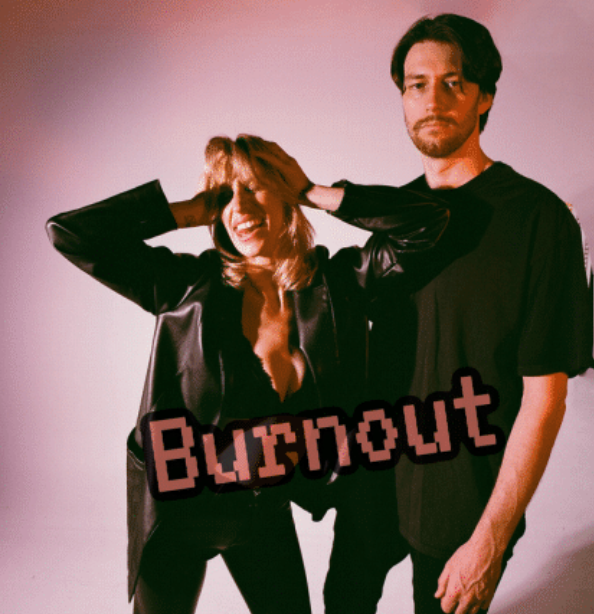
Beth Jones makes spooky jazz-rock feel like a candlelit confession overheard in the back of a noir bar. In this interview, she opens up about JOHNNIE WALKER RED, a smoky, decadent single shaped by lost recordings, brass-band grandeur, bedroom melodies and the freedom to be unapologetically self-indulgent. The conversation moves through spooky performance art, 50s and 60s jazz, vulnerability, theatrical instinct and the visual world surrounding her upcoming winter album. Jones also reflects on Queen, Billie Holiday and Elliott Smith and why drama can make personal pain feel communal rather than self-pitying.
Welcome to A&R Factory, Beth Jones. Thank you for taking the time to talk to us about your music, your visual world and the spooky jazz-rock storytelling that makes your work feel so bewitching.
Your latest single, JOHNNIE WALKER RED, feels like it could be a gateway for goths into jazz, with that woozy melancholy, theatrical swagger and dark narrative pull. Did you always imagine the song having that smoky, almost decadent atmosphere?
Somewhat – we always wanted it to sound big, as if it was being played by a brass band in a jazz bar – very smoky, very decadent, French Noir type – but we were never sure how big it was going to be until we recorded it.
It’s funny, we actually had two recordings of this track – we had one and then the recording was lost, and we had to redo the whole thing from scratch – but that first version was never quite right. It was very soft, very piano and saxophone Ella-Fitzgerald type classic jazz, so it was kind of a blessing to start again, and to build the track up from the drums. That’s kind of what gave it that theatrical, dramatic feel – we basically gave ourselves the freedom to be completely self-indulgent with it!
You use spooky performance art to tell the stories behind your songs. What came first for you creatively: the music itself, the visual character of the performance, or the emotional scene you wanted the listener to step inside?
It depends on the song to be honest. For Johnnie Walker, it was definitely the melody first – I remember sitting in my bedroom at Christmas, coming up with this little idea for the second verse and building it up from there, but for some songs, the visual definitely drives it.
For the next single, we actually filmed all the visuals before we even started recording the track, and that let us get the emotional scene and soundscape we wanted set up before we started arranging, and that definitely pushed the song in a certain direction. I think that tends to make the songs much more cinematic and feeling, cos you’re almost writing a track to accompany a scene in that way.
Your work carries the glow of 50s and 60s jazz while pulling in classic rock drama. What is it about those older jazz textures that still feels inspirational to you now?
I think it’s the vulnerability. I know there’s an Amy Winehouse quote where she says modern music can be very “fuck you, I’m independent” whereas the old stuff is very “I don’t care if you don’t love me, I’ll love you anyway” – it’s that concept of real devotion, and I think that comes through in my music quite often.
There’s also a feeling to classic jazz, like if you pop on some Billie Holiday or Ella Fitzgerald when you’re walking home, it puts you in that little romantic mood, and I think some modern music can do that too, like Radiohead and Elliott Smith, but nothing’s like the classics.
How do you approach theatricality without letting it swallow the vulnerability at the centre of the song?
I really don’t try to be theatrical, I think I’m just very overdramatic. I started out singing musical theatre when I was like four, and I think that paved it a little bit, like I remember when I was in primary school and my crush didn’t like me back, I sung “I’m Not That Girl” from Wicked on the way home, and I think that kind of sums me up as an artist, I am very vulnerable but the way I show it is a little unserious.
And I do think you need some theatricality if you’re being vulnerable – when you’re being vulnerable in a song, the quality just has to be there, cos otherwise you fall into a place where people see you and think “oh she misses her ex, I feel sorry for her” rather than “oh, she’s putting what I feel into art”. I think drama lets you project feelings into a space where other people can see it as relatable rather than just personal whinging.
You have mentioned artists such as Queen, Elliott Smith and Billie Holiday as influences. What do you think those very different artists taught you about performance, emotional candour and letting a song hold its own shadow?
God, that’s a hard question.
I think Queen and Freddie Mercury especially are hugely inspirational to most artists because they didn’t see walls. If someone thought a song was too weird, they released it anyway. Too camp, they did it anyway.
I mean, it’s funny, we’re talking about Johnnie Walker Red; Brian May’s actually one of the reasons I kept at this song, cos I happened to be lucky enough to meet him at some event and I asked his advice on it, and he said keep going with it but let it write itself, so, honestly, it wouldn’t even exist if it wasn’t for Queen.
Elliott Smith and old jazz music carry feeling – they’re like soundscapes. If you’re walking home, or you’re on a bus at night, listening to Elliott Smith or Billie Holiday incites this kind of feeling or this mood, and I think that being able to create that in people, to bring that sort of nostalgia, is real magic.
Your upcoming album is set to arrive in winter. How does JOHNNIE WALKER RED set the tone for the wider record, and what side of you should listeners expect to meet across the full release?
Johnnie Walker Red just explains what the album is about and what inspired it in the clearest terms a camp artist who doesn’t talk about her feelings can put it. The album’s been mixed so that the tracks run into each other, so Johnnie Walker is a lot longer than you think when you hear the album.
Every song is very closely linked, because they’re all telling the same story. Johnnie tells it as it is, but some tracks are more introspective, more metaphorical rather than literal.
I think listeners should expect a mixture of pretty straightforward tracks and some complete indulgent weirdness: we’ve got jazz-inspired work, we’ve got opera-inspired cuts, we’ve got shoegaze, we’ve got pop, it’s very very theatrical, and I think the influences are very clear.
You have been creating artsy visualisers around this material. How involved are you in shaping those visuals, and what do they allow you to express that the songs only suggest in sound?
I’m a bit too involved in shaping them – they’re all my ideas, I direct, I produce, I help to create some of them physically as well.
I see songs as projects, and I think that really influences the way I work. A song isn’t just The Track, the song is every instrument on it, it’s the single cover, it’s the photos, it’s every live performance, it’s how people react to it, it’s the story, it’s the digital booklet and it is the visuals that you put around it.
And I think that some songs do hold their own – I don’t really think Johnnie Walker really needed much in terms of visualisers, but I think that for songs like Lullaby, or my next single, visualisers come part and parcel with the song and help to tell the story. I think it’s all a part of asking the song what it needs and listening and not forcing anything.
Where do you find that you fit in the big smoke’s music scene?
I really don’t know. I love London, my recording studio’s in London, all my gigs are in London, a lot of my songs are about London, people I’ve met in London, it’s definitely a great place to be if you’re an artist.
I don’t know where I fit. I’m the kind of person that will bob around to all the tiny basement jazz venues, I’ll sing a couple of things, and I’ll head home. I don’t think I’m the kind of person who’s going to be big on the indie pub scene anytime soon – I’ve been there, done that with my band, loved it but it’s not who I am anymore.
I think I’m an artist influenced by London, who writes and records and performs in London, but if you do see me, it’s likely to be in a tiny little jazz place or the studio, not a massive rock venue.
–
Discover more about Beth Jones via her official website.
Connect with the artist via Instagram and TikTok.