Search results for

run the enemy

Spotlight Feature: Run The Enemy filtered indie post-punk poetry through a pensive Americana lens with their sophomore single, Barbara Gray

For their second single, the cerebrally poetic Indie/Americana ensemble, Run the Enemy, unearthed the sublime from the serendipitous, immortalising the fleeting yet eternal encounter between Elvis and Barbara Gray in 1956.

Infused with samples of fervent Elvis fans within an Editors-esque post-punk framework, the Cambridge, UK-based band magnifies the tenderness of transient intimacy in a pop culture moment of pure connection, inviting listeners to inhabit that ephemeral instant and luxuriate in its synchronicity.

With vocals reminiscent of Elbow, choked with emotion and deftly illuminating the lyrical depths, and an atmosphere of sepia-toned nostalgia enveloping the hauntingly angular guitars, iridescent keys, and throbbing rhythm section, Barbara Gray lodges itself in the soul, simultaneously imparting the transcendent nature of a moment never to be lost to history.

You’d be hard-pressed to find a better entry into the UK indie scene in 2024. It’s only a matter of time before Run the Enemy tears its way into the mainstream.

Run the Enemy Said:

“The song is about randomly overlapping lives, inspired by the fleeting moments shared by Elvis and Barbara Gray, captured on film by Alfred Wertheimer in 1956 at the Jefferson Hotel in Virginia.

For over fifty years, the girl remained anonymous until she appeared on the Today Show to discuss the one day that her life crossed with Elvis’s, like a crossword clue; he was seven down, she was eight across. Despite the moment being so transient and their lives going in such different directions thereafter, their moment is preserved forever on film.”

Barbara Gray was officially released on June 28th; stream the single on Spotify.

Follow Run the Enemy on Instagram. 

Review by Amelia Vandergast

Run The Enemy brought even more tragedy to the legacy of Sylvia Plath with their Post-Punk vignette, She Writes Poetry

Poetry may be becoming a dying art form, but it lives and breathes through the hauntingly melodic introspection in the standout single, She Writes Poetry, from Run the Enemy’s hotly anticipated debut album, Trail of Tears.

After the post-punk-tinged and angularly cavernous lead guitar work in the prelude, the timbre of the melancholic indie vocal lines spectrally appears in the achingly pensive release which finds the monochrome middle ground between Editors earlier work and Interpol’s most affecting expositions of ennui.

With the final crescendo, She Writes Poetry, which gives Richey Edwards and Morrissey a run for their lyrical vignette money, builds into a massive all-encompassing production with strings carving through the post-punk atmosphere.

Written to allude to the abusive relationship between Plath and Ted Hughes, the Cambridge-based outfit succeeded in bringing even more tragedy to the legacy of Plath, given that she stuck her head in an oven in her final moments and penned some of the most pensively affecting works to date, that is some feat of ingenuity.

Stream She Writes Poetry as part of Run The Enemy’s debut LP, Trail of Tears, on Spotify now.

Review by Amelia Vandergast

Post-grunge was dragged through distortion in Hello Enemy’s lead LP single, ‘Helter Shelter’

Explore the middle ground between Metallica, Alice in Chains, and Soil, and you’ll find Hello Enemy with the sanctifying scuzz in their standout single, Helter Shelter, taken from their freshly released album, That Goes on There. Filthy, adrenalised, and carrying the full anatomy of a grunge earworm, it drags nostalgia into the present, snarling and kicking.

All the hallmarks of the alt-90s Seattle sound are there, but what makes it hit harder is the vindicating volition delivered through the harder instrumentals, which don’t have room to hold prisoners. There’s no posturing or pastiche; just raw sonic muscle blurring the lines between grunge, hard rock, and metal. Whether you want to pigeonhole them or not, there’s no denying they radiate the kind of aura and authenticity that rarely reverberates through the underground. It’s that unteachable intensity that pulls them out of mimicry and places them firmly in the pantheon of post-grunge panache.

Hello Enemy, who’ve dropped 17 singles across the last three years, are no strangers to momentum. With their debut album released in May 2025, they’ve already earned high rotation on US and Australian airwaves, co-headlined festivals, and powered through a self-funded tour – all while staying faithful to their ethos of minimal gear, maximum sound. That Goes on There wrestles with themes of balance and resilience, but Helter Shelter is its rowdiest, most cathartic moment – an anthem forged for both dive bars and stadium stages.

Helter Shelter is now available on all major streaming platforms, including Spotify. 

Review by Amelia Vandergast

Ideology, Identity and Art in the Death of Critical Thinking

After moving from Manchester to a semi-rural village in Cheshire this summer, I decided to try to get involved in the local community. I joined a few groups on Facebook and noticed that the village prides itself on fostering a creative community. Sadly, what I found felt closer to the embodiment of what happens when culture dies and crafts thrive.

There were craft fairs, wellness retreats, local workshops, handmade products and an arts centre forever showcasing the works of various artists. On the surface, it should have felt charming. This is the kind of place where you can still buy eggs from the side of the road, where community noticeboards ought to feel more human than algorithmic, where creativity should still have soil under its fingernails. Instead, I kept seeing small businesses using ChatGPT to design flyers for their events, services and products. Even meditation retreats were being advertised in banal high-gloss typography with imagery that set my teeth on edge.

The irony was almost too much. A village championing creativity while quietly outsourcing its visual language to AI felt less like progress and more like cultural self-lobotomy with Canva-friendly borders. So, naturally, I decided to be a contrarian.

When Creativity Becomes a Template

I made the point that the overreliance on AI in a place that claims to value creativity makes the village appear as though it has no soul. I was expecting a little backlash; that comes with saying anything mildly rousing in a public forum. What I wasn’t expecting was for people to use ChatGPT to generate their counterpoints, which they then “humorously” provided, as though delegating their defence of AI to AI was some kind of knockout blow rather than an accidental performance-art piece about the death of critical thinking.

Do these people know that AI is a machine of hyper-validation? More importantly, do they know that what little critical thinking power they had is being erased by their overreliance on ChatGPT? Or maybe I am being too generous. Maybe some people never had the power of critical thinking in the first place. Maybe they only knew how to tribalistically follow the script belonging to their ideology.

One person responded with the kind of motto-thinking that has infected every corner of public life: “out with the old, in with the new”, “keep up, or you’ll be left behind.” It proved my point more strongly than anything I could have written myself. Suddenly, all those home décor products with “Live, Laugh, Love” and “Keep Calm and Carry On” plastered across them started to make a lot more sense. They are hardly the proverbs of Confucius, but they still give people codes to live by. They offer pre-packaged thought for people who want the emotional comfort of having a worldview without the inconvenience of building one.

If this sounds harsh, it is because there is something spiritually depressing about watching a supposedly creative community confuse novelty with imagination. AI can generate a flyer. It can generate an argument. It can generate the illusion of competence. What it cannot generate is taste, context and soul.

The Village, The Pint Mug and The Blinkers

In this Reform-voting town, where you can buy mugs with Nigel Farage smugly brandishing a pint in his working-man cosplay outfit at a stall on market day, I immediately got the sense that my relatively liberal and progressive morals were not going to be a natural fit. The politics of the place seemed written into the objects, the jokes, the suspicion of anything that sounded too “woke”, too urban, too soft, too bothered.

But what unsettled me more than the politics was the blinkeredness. People did not seem to see the harm in AI replacing graphic designers. They did not seem to connect the casual normalisation of automation with the obliteration of futures belonging to the children and grandchildren they happily display in their profile pictures. They see record numbers of people out of work, yet refuse to believe that people might truly be running out of employment options in an era when jobs are being wiped out by AI automation, collapsing high streets and an economy that has made human labour feel increasingly disposable.

The same people who romanticise community seem perfectly willing to erode the economic foundations that allow creative communities to exist. They want the market stall, the local artist, the independent shop, the handmade product and the village fair, but they also want free design, instant copy, automated admin and frictionless convenience. They want the aesthetics of humanity without the cost of sustaining human beings.

This is not simply about a bad poster for a meditation retreat. It is about the ease with which people will celebrate “creativity” while hollowing out the labour behind it. It is about the smug belief that being able to prompt a machine makes you adaptable, when it might just make you complicit in stripping value from the work of people who spent years learning how to think visually, write clearly, compose, edit, design, draw, sing, photograph, code or make.

Identity-Based Thinking Is Not Thinking

The bleakest part is that I cannot simply place myself on the other side of the argument and feel smugly at home there either. I am also ostracised by the radical nature of the left, where questioning the party line can make you sound, in the eyes of the most online moral enforcers, indistinguishable from the people they have already decided are beyond saving.

I found myself agreeing with Aperture in his recent video about society being stuck on the lowest level of thinking, locked into identity-based thinking, which is not really thinking at all. It is a tribal act. There is no need to think because truth has become less important than identity. It does not matter how intelligent people are if emotion is always placed above logic, if disagreement is treated as contamination, if curiosity is mistaken for betrayal.

That is why social media rhetoric has become so savage. Pile-ons grow more extreme because they are not really conversations; they are public rituals of belonging. People prove their moral identity by attacking the person who said the wrong thing, asked the wrong question or failed to repeat the correct slogan with sufficient speed. People who question anything are treated with the same venom as people who actively support horrors. Nuance has been murdered in broad daylight, and everyone keeps filming the body.

There is a sickness in society, and our overreliance on AI, our willingness to delegate critical thinking, is only going to make it worse. If people already think in mottos, what happens when they use AI to polish those mottos into something that sounds intelligent? If they already confuse emotional certainty with truth, what happens when a machine reflects their assumptions back at them in grammatically fluent paragraphs?

AI doesn’t challenge most people who spill their secrets, spites and woes into it. It flatters them. It organises their existing instincts into plausible form. It gives the illusion of depth to people who have not actually gone deeper. That is why it is dangerous in a culture already starving for critical thought.

The News Cycle as Sleeper-Agent Activation

Unless we remove our identities from our ideas, become less afraid to think beyond party lines, and grow more receptive to views that do not mimic our own, the tribalistic, divisive nature of society will only become more extreme. There seems to be a new issue to divide us every day to add to the existing body of divisive topics, Brexit, abortion, religion, LGBT rights, politics, AI, vaccines: society is fragmenting, and our window of tolerance for other people is getting smaller and smaller.

When something surfaces as a new cultural talking point, we jump on it with our partisan knives fully sharpened. We rarely stop to wonder why it has been blown up to such a degree. Tiny events choke news feeds. Thousands of YouTubers make video essays. Just as many journalists chime in to add pomp to a conversation upheld by the vomited opinions of people who mostly want to affirm their stance on an issue.

Yet, when you ask people to think about why they are waking up to cultural talking points like sleeper agents whenever something surfaces, you instantly become the enemy. Are our identities really so fragile? Is it so unbearable to not know something? To be publicly silent on an issue you’re not completely competent in speaking on? It is okay to be curious. It is okay to pause before attaching your soul to a take. It is okay to admit that you do not know enough yet. Because even the people who think they know don’t know anything beyond a headline, a depressing image; they think they can get all the context, that they don’t need to dig deeper to find the nuance, which, sadly and inconveniently for some, exists EVERYWHERE.

That brings us back to the Dunning-Kruger effect, where the stupid are full of confidence and the intelligent are full of doubt. In a world where there are three sides to the story- yours, mine and the truth- doubt should not be treated like weakness. It might be the last sign that a person is still thinking.

Conclusion: What Happens to Art When Nobody Can Think?

You frequently see people declaring, “if you think X, delete me”, as though witnessing an opposing view is somehow too painful to survive. We need to get comfortable with the idea of autonomy again. We need to remember that disagreement is not violence, curiosity is not betrayal, and thinking is not the same as selecting whichever opinion best matches the identity we have chosen for public display.

Because if we lose the ability to think critically, what happens to art?

Will there be anything left to express through music, or will we be left with carbon-copy love songs, algorithmic dance anthems, AI-designed posters and artists too afraid to step outside whichever ideological lane keeps them safe? Art cannot survive if every idea must first pass through a tribal compliance check. It cannot survive if people outsource their thinking to machines and their morality to slogans. It cannot survive in a culture where “creativity” is celebrated only as an aesthetic, while the difficult, dangerous act of thinking for yourself is treated as antisocial.

The village taught me something I did not expect to learn from Facebook groups and ugly AI flyers. It taught me signs of the death of critical thinking are cheerful templates, recycled mottos, generated rebuttals, political merchandise, social-media pile-ons and the slow shrinking of our tolerance for complexity.

When it is finally in the ground, people will probably ask ChatGPT to make a poster for the funeral.

Article by Amelia Vandergast

Art by Maria Tokar

Soul Circuits and Righteous Static: An Interview with MC Zappa

MC Zappa’s forthcoming LP, Critical Times, rises from four years of upheaval, self-reckoning and sharpened conviction. His decision to create what he dubs the first Christian Bit-Hop album didn’t arrive through marketing strategy or genre novelty, it emerged from the starkest corners of lived experience. Severe depression, a traumatic brain injury, material fixation and a mounting sense of moral collapse pushed him to reassess everything he thought he understood. That reassessment led him towards faith, scripture and a pressing need to interrogate the contradictions he saw in religious culture, personal behaviour and wider society. In this interview, he traces the genesis of Critical Times, the emotional architecture behind tracks like Why?, the spiritual mentorship that shaped the record, and the cinematic ideas gathering pace behind the scenes.

What first sparked the concept for your upcoming LP, Critical Times, and how did the idea of creating the world’s first Christian Bit-Hop album start to form for you while you were stepping back from releasing music?

It only takes a single second for your whole world to change. So imagine what can happen in four years. The last album I released was “Do You Mind?!” in 2021. Although it’s a mostly instrumental album that tells surrealist stories and presents absurdist scenarios, it was still deeply personal to me, and in some ways unconsciously reflected my state of being in real life. “Apathy” is an unconscious mirroring of the anhedonia I was experiencing as a part of my severe depression. “Take Me To The Mall“, on some level, reflected the obsession with material possessions that I had developed, and the shopping addiction that I had developed. “More Bullets” indirectly pointed to the unhealthy obsession with firearms that I was nurturing around that time. These things didn’t get better with time, they got worse. I was Travis Bickle in braids.

Without going into too much detail, the culmination of my poor choices, my depression, the traumatic brain injury I had received two years prior, all came to a head and led me into a very bad spot in 2023. I subsequently had a wakeup call, and decided to give up my iniquitous ways and start following Jesus Christ. Now, with this decision came observations and realizations. I quickly came to realize that the “Christianity” I had been seeing and hearing about all my life had little to do with the life, teachings and examples of Jesus Christ and His apostles. I realized that just as it was, those who would follow Him would have to pick up their cross, deny themselves and become “new creations”. I learned that the entire Bible could be summed up into two simple commandments—to “Love God with all of your heart, mind, body and soul”, and to “love your neighbor just as you do yourself”. But every day I was being mistreated by people who claimed to be Christian. The same people that would go out of their way to belittle and humiliate me in front of a crowd would turn right around and talk about their plans to sing and worship in church later on. They mocked those whose worship was sincere, calling them “strange” and “extreme”. They even had the nerve to mock His Holy name, JEHOVAH. The selfsame ones that used me and viciously lied on me (just to come back and ask for my help later on, at that!) would often say with 100% seriousness, that they loved God and that God favored them and everything they did! But what was really deep was realizing that while I was protected by God and therefore should not despair about the abuse, it was actually their welfare that I should be concerned about, because the fact that they were acting so cruelly indicated that they needed serious help. On my phone, my feed was awash with sordid articles of male faith leaders who preached sexual purity and “family values” while sexually abusing vulnerable young men and pressuring their underage mistresses to have abortions. Megachurch pastors bought jets and fancy cars while teaching damnable heresies. It was always worthy of derision when I was growing up (which is a part of why I was so comfortable blaspheming, and why it took me so long to convert!), but now that God had called me to be one of His children, these things now filled my heart with a burning; yea, a burning of righteous anger. These wicked things reflected a lack of love towards both God and neighbor, so I felt obliged to rail against them the best way I knew how. So I picked up the mic.

After reading the Bible, developing a personal relationship with God and fellowshipping with the saints became a part of my daily life, I knew there were things I wanted to make songs about, but somewhere along the line it all just coalesced into an idea for an album. At first I was scared, and I prayed to God constantly, seeking definite confirmation from Him that it was okay. Not only did I receive it, but my conscience led me to realize that everything else had to be pushed aside to prioritize the release of “Critical Times”, because the message was so crucial.

You’ve said the new album marks a shift in tone and approach. What kind of material are you exploring on Critical Times, and how does it sit apart from what you’ve released in the past?

“Critical Times” is the world’s very first Christian Bit-Hop album. With that being said, “Critical Times” is about various facets of the Christian life, as I see them. At the conclusion of the matter, all having been heard, the underlying message of the album is that Jesus Christ is coming back soon, but when He does, it will be to judge the Earth and wage righteous warfare on those who hate Him and His Father. His birth, life and death were all prophesied (and all of them came to pass just as it was written), and so was His return. You can either be His friend or His enemy; there is no in between or “riding the fence”, for “whoever is not with Me is against Me, and whoever does not gather with Me scatters” (MATTHEW 12:30) The choice is 100% yours and it is absolutely not my place to force the Word on you, but I do have an obligation to at least let the people know what’s happening and what’s about to happen (EZEKIEL 33:8, 1 CORINTHIANS 9:16) All I can do is tell you that the Word is faithful and true, and I can tell you how my own life and testimony bears witness to this.

I talk about a lot of things across this record, matter of fact there was so much material that I had to cut it short and cap it, or else the album would have like 40-45 tracks. “Meats Fa The Belly” (taken from 1 CORINTHIANS 6:13) is about sexual immorality and how it leaves you more and more empty the more you engage, despite it deceiving you into craving it. “Money To Burn” is, for all intents and purposes, the first diss track I will have ever made over my decade-long career. It is an all-out polemic against the religious grifters, the prosperity pimps and false teachers who bleed my people dry and intentionally lead them astray with false doctrines, all “for the love of money” (1 TIMOTHY 6:10) “Shake It Off“, (taken from MATTHEW 10:14) is a short yet funky track about how when you preach the Gospel, some people will laugh in your face and some will actually get angry and despise you for it, but you are not to despair, but instead move on and find those who are receptive and eager for the Word. “None But Jesus” is my personal testimony of how I was alone and lost, profoundly lost, but Jesus had mercy on me and saved me, because only He could; I was completely and utterly incapable of saving myself. And of course you already know that “Why?” is a series of rhetorical questions intended to provoke self-examination and conviction about whether or not our faith is sincere.

I want everyone to know that while my subject matter is radically different, please don’t think for even a second that my style has changed or that I’ve “gone soft”. If anything, I kinda felt like I had to go harder than ever before with the 8-bit boom bap on this album, for the simple fact that many people see Christian Hip-Hop as “corny”. To which I reply: ask yourself why it’s “cool” to talk about sexual immorality, love of money, and hatred of your neighbor when every rapper out is talking about these things, but talking about picking up your cross, denying yourself, protecting the vulnerable, seeking justice and correcting the oppressor is “corny”? One gives you things because he wants you to destroy yourself, while the other One wants to take away the wicked and unprofitable parts of you so He can fill you with life, true life. I’ve experienced both at this point, and it’s a no brainer. But that’s on you.

When you listen back to Why?, what moment in your own life does it feel most connected to, and how did that spark the writing of the track?

“Why?” is not so much connected to a single moment so much as it is a lifetime of observance and patterns. Nonetheless, if I absolutely had to pick a single moment, it would probably be the day I found out that this older guy I used to work with, who seemed nice and always wore a large silver cross, was arrested for committing a heinous sexual crime against a vulnerable victim (which “Christians” covered up and swept under the rug for PR purposes, but that’s something else all over again!). All I could register was shock and horror. Then it occurred to me that he probably was wearing that cross when he did the abominable act. I think that incident was probably in my mind when I wrote “why are we quick to rock a cross and scream Jesus/but forget His death by means of which He redeemed us?”

The questions that I ask on this track are related to things that I’ve seen on both a micro and a macro level. When I say “why is it every day I’m forced to witness injustice/when my soul and conscience can only take so much of this?”, I’m referring both to the evil that is being wrought by religious leaders across the world, and also to the corruption and abuse of authority that I personally see around me on a daily basis. When I say “why is loving correction conflated with hatin’/don’t you realize, that’s just another tactic of Satan?”, I’m referring to the broader societal trend of all wise counsel being misinterpreted as “hating” and therefore dismissed, but I am also referring to the times when loved ones attempted to give me wisdom and solid Biblical counsel, but I rashly refused it because it wasn’t what I wanted to hear, and had to learn the lessons the hard way. This is how I know that the Holy Spirit inspired me to write this song, because every time I hear it, I myself feel convicted.

There’s a voice running through Why? that adds an unexpected emotional weight. Who is the older woman featured on the track, and what does she represent within the wider album?

That is someone who I met as a coworker, and who has now become a dear family member. I affectionately refer to her as “Auntie Molly”. I first met her in 2022, and she was one of two people that treated me like their own child, consistently shared the Gospel with me and encouraged me to leave my sins behind and follow Jesus. She is one of my two main spiritual mentors and has been there every step of my way through my walk with Christ, and as such it seemed good to me to ask her to contribute Scripture readings and vocal contributions throughout the album. She has a very distinctive flavor to her speech, which adds personality to the Scriptural truth that is proclaimed on “Critical Times”.

After taking four years away from releasing music, what pulled you back to putting new work into the world, and how did the break shape the album’s themes?

Well, while I was trying to straighten up, I was working on new music here and there the whole time. It’s just that I was so distracted, overwhelmed and scatterbrained that I couldn’t really focus on anything long enough to finish any projects or make any coherent decisions. But as I say, my conversion and subsequent experiences caused me to have a zeal and a deep desire to share what I had learned. I don’t say this to sound egotistical, but I forget more ideas than the average person comes up with. You know, Jesus once told a parable about a man who found a priceless pearl, and sold everything he had to purchase it. Similarly, I pushed all the plans I had to the side so I could prioritize “Critical Times”, as it is, in effect, an offering to God.

As far as how the break shaped the album’s themes, that’s easy. You know, I’m 26 years old. I started making music when I was 16. So according to science, my brain wasn’t even fully matured until last year! With the things I had seen and experienced, I realized that I was misguided in some ways. Social justice, equity and condemnation of hypocrisy has always been at the root of my music. Dig it; I’ve only shot two music videos thus far, and one of them is for “Call The Law”, my protest song about police brutality. I have always wanted marginalized people to be treated fairly, although in years past I had a very obnoxious and self-righteous way of expressing it. I was raised by a pro-black, socially conscious mother. I knew all about colonialism, misogyny, police brutality, institutionalized racism, and poverty. But what I’ve come to realize is that all movements that gather under these banners are “vanity”. I’ve said since I was a teenager that if you want to solve a problem, cut the root, not the branch. Think about it. There’s at least one person who has the means to end world hunger singlehandedly, and he just…didn’t do it. Ain’t we been fighting against racism and sexism since the 60s? And now look…not only did these organizations and movements not solve the problems, but in some cases they actually introduced additional problems! (BLM money laundering, anyone?) The fact is that all these problems stem from our collective failure to keep the Second Great Commandment: “love thy neighbor as thyself”. But you can’t legislate people into loving either God or their neighbor; that’s a heart change that has to happen from within, and what’s more it has to happen on a global scale. We as humans are utterly incapable of solving the mess that we’ve gotten ourselves into, for the simple fact that we still have the same underlying problem that’s caused it. Only God, our Redeemer, can put a complete and thorough end to all these evils. DANIEL 2:44 and ECCLESIASTES 3:14, that’s all I can say. I’d rather redirect my efforts and my limited time towards a permanent solution (cutting the root) than to keep wasting my time on vanity (cutting the branches, which will only grow back)

Your filmmaking always carries a distinctive tone. What usually kicks your creative brain into motion when you’re crafting ideas for your visual work?

Thank you, I appreciate that. In the past, myself and my crew would more or less just pick up the camera and pick whatever locations were most convenient. But now, I’ve carefully studied the old masters (Scorcese, Tarantino, Kubrick, Leone, Raimi, etc.) I instructed myself in the art of writing screenplays, the intricacies of lenses, shots, film stock, focal lengths and lighting, and I can’t just do things willy-nilly anymore. So now, things typically begin in my mind with a single visual motif or concept, and everything else gets carefully built around it.

But I would say that more often than not, my screenplays are more behavior-driven than they are image-driven. In other words, my mind’s eye imagines people doing things, and I wonder what kind of effects their actions would have depending on the scenario. I’m still a student of course, but I have hallmarks of my own directorial style, one of which is anachronism. I love to subtly clue the viewer in by dripping minor exposition details. For example, I have a feature length urban drama called “Vanity” that’s in pre-production, about a bookish young Alabamian woman named Jasmine whose struggles and misguided attempts to find meaning in life lead her to faith. Early in the film, Jasmine’s best friend, Brooklyn, shows her a picture of the Twin Towers that she took while on vacation. Later on, someone mentions listening to Megan Thee Stallion on their Walkman. Later still, Jasmine’s friends chide her for blowing off hanging out with them, saying “Blockbuster, Blockbuster! All you ever wanna do is go to Blockbuster!” So it makes you wonder “wait a minute, what decade does this movie take place in? Is this even reality?” These things don’t align with the way things are in the real world, so it kind of jolts and disorients the viewer, which is what I want. If I can jolt you, that means you’re paying attention.

You hinted that you’ve got more film projects on the burner. What can you share about what’s forming behind the scenes, and how do these projects link with the themes of Critical Times?

Yes, I do! I love talking about film, I wish more people would ask me about it. At this present moment, I am working on my PSA series called “Get Right“. The Get Right series highlights that the endtime prophecies that Jesus made 2000 years ago are being fulfilled before our eyes every day, so it’s time to get right with God through Jesus Christ. But I don’t wanna make stuffy, preachy content. I’ll save the dust for the drums. I like to make real engaging stories with real people that you can engage with. I have already shot and released PSA #1, “Time Is Not On Your Side“, on my YouTube. The one that’s in (pre)production right now is actually #3 (“Face The Music“), but I’m shooting out of sequence. The basic concept of Face The Music is a young man seeing an ad on his phone for a beatmaking contest, getting to work on a beat and scratching it, then being interrupted by a knock on the door from an unseen yet luminous visitor. I’m actually somewhat frustrated because although I’ve had the equipment and the set prepared for quite some time, I’m having a little trouble casting talent. I had a young man scheduled to shoot with us a few weeks ago and although we confirmed with him twice, on shoot day he flaked out and didn’t tell anybody anything. So I’m feeling a little discouraged on that front, especially since I pay all my lead actors $15/hr (which is good money for a side project in GA!), and this role is easy as pie, so I’m not understanding what the issue of finding actors is. But my casting director is handling that for me on the side, so I’m grateful for that. These are just challenges associated with being an independent filmmaker, I reckon.

That’s the short term. Now as far as the long term, I have an anthology series called “Word On The Street” that I’ve been working on for roughly the past year. Think “The Twilight Zone” and “Black Mirror“, but faith-based. I’ve written two whole episodes thus far. Each episode is 15-20 minutes long, begins with a relevant verse or two, and illustrates the natural (or supernatural in some cases!) consequences of going against God’s standards. For example, the episode “Every Idle Word” is about an externally beautiful woman who takes pleasure in belittling and verbally abusing those who she sees as “below” her, yet tries to make an outward showing of being pious and nice. The title cards display MATTHEW 12:36 and 15:11. Anyway, the woman gets 3 supernatural warnings from God about her acid tongue, but scoffs at them all. I won’t spoil it, but let’s just say that at the end she finds the passage about “what comes out of a person’s mouth being what defiles them” to be horrifyingly true. I don’t know why, but I seem to have a particular knack for writing screenplays with elements of horror; they keep cropping up in almost every serious story I write. I also have an idea for a Spaghetti Western called “Cowgirl Christ, or the Acts of St. Rose“. But being that I’m currently having trouble even shooting this short film that only has a single character, at the moment I don’t see how I’m going to get these more intricate features shot. In any case, there is one central theme across all my cinematic projects: You are more than welcome to reject God, His wisdom and His counsel, but just know that there are natural consequences. Life is much easier (and more meaningful) with Him on your side than it is when His face is against you. This message can be extrapolated from “Critical Times“, so I guess you could say it all ties together.

With the album on the way, how are you approaching the roll-out, and what kind of experience do you want listeners to have when they step into this new chapter of your sound and storytelling?

I’m still getting the hang of this whole “marketing and promotion” thing, but thus far, by the grace of God, I managed to drum up anticipation for the lead single a month before it even came out. Now, “Why?” seems to be getting a good bit of attention, so I know there’s anticipation for “Critical Times“. But as far as the rollout, I’m just talking to as many people as I can about the record, and I want to create a strong brand identity around it. That said, I’ve stepped up my visual game, creating visualizers and shareable lyric graphics.

In a recent review for “Why?“, it was described as a “spiritual gut-check”. Well, that is the effect I’d like all of “Critical Times” to have. I want people to experience “Critical Times” as a one-two punch: first you get struck by the ill Bit-Hop beats, then you rewind for the conviction in the lyrics. Just as you’ve heard it said: “one time for your mind, two times for your soul”.

Discover MC Zappa on all major platforms via this link. 

Interview by Amelia Vandergast

Inkakai Interview: Fire, Metal, Shadow and the War Against Ghosts

https://open.spotify.com/artist/6Rdwo8CHG9REDyjqnbmXb0,

Across three decades, Inkakai has walked through fire, sabotage, and spiritual crossfire to arrive in its current form, carrying the scars from Bleak and Fireal as proof of survival rather than nostalgia. In this interview, the masked collective pulls apart the machinery of ghost production, industry corruption, and ego driven networks that tried to turn their life’s work into a disposable product. From Lapland’s stark forests to Helsinki’s poisoned glamour, from onibi flames and martial arts discipline to sci fi futures where spirit wrestles with the machine, they sketch out a worldview where integrity matters more than algorithms, sync pools, or chart positions. If you have ever wondered what it costs to stay truthful in a field built on illusion, this conversation will light up the shadows.

You began your creative path under the name Bleak back in 1997, then moved through Fireal before evolving into Inkakai. What inspired each transformation, and how do you see this latest incarnation reflecting everything you’ve learned along the way?

To fully comprehend this journey, it is essential to examine the unvarnished truth, including the missteps encountered along the way.

The very first transformation occurred in Rovaniemi, Northern Finland, in 1995, when a school cover band evolved into Neutral, built largely on the Inkakai founder’s material. Guitarist Warden invited him to jam, and he brought his songs along with his cousin Madu (Tuomas Miettinen). After Warden left, lead guitarist Crab (Janne Lehikoinen) joined. Originally called the Finnish ‘Sheol,’ the band was renamed Bleak in 1997 and ran until 2000. The founder remained in Rovaniemi to form the metal project Umbra but was later pressured to move to Helsinki with Madu and Crab. In 2002, Bleak was rebuilt around his new material, but Madu’s attempts to assert control caused friction with the founder. Drummer Junior (Mikko Pietinen) joined in 2006 after the debut album ’Burns Inside’, produced by Tomi Malm. Bleak ended in 2009 due to unresolved toxic dynamics; Madu, Crab, and Junior proved to be the band’s three biggest mistakes.

The founder immediately reformed the band as Fireal, reviving the heavier Umbra sound with Amiga 500 influences and recruiting T-Noir (Tero Mustonen), who contributed nothing to the album and a decade later was revealed to have been linked to their enemies, marking another mistake and leading to his firing in 2019. Fireal released the second Bleak album ’The Dark Side in 2011, co-produced by Tomi Malm and Jukka Backlund, following the success of the single Halo (2010). On the verge of success, the band faced sabotage from within and beyond, unbeknownst to the founder. Fireal’s film soundtrack plans were abruptly cancelled and later taken over by Tomi Malm, who, along with Backlund, was discovered in 2024 to be connected to the founder’s enemies, becoming the band’s longest-standing mistakes.

After joining Lordi on Finnish Clash of the Choirs in 2011, the founder adopted masked imagery but, disillusioned by industry corruption and still unaware of the saboteurs’ identities, placed Fireal on hiatus in 2012. By 2013, he introduced the hooded, masked, anonymous collective that later became Inkakai — then called I.F.F. (Imperial Forces of Fire), named after an Amiga 500 file format — and began work on the third album ’Unlite’, announcing the single ’Serafi’, which was later cancelled. Around this time, a ghost production group with ties to Freemasonry and satanic networks — featuring ex-members “Snake” (alter ego: Parasite, aka “Madonna”), “Shrimp,” “Senior,” and “Theron Blackstone” — escalated sabotage into a full campaign, creating ghostwritten bands under “Spineless” metal labels and “War Chapel” to undermine, plagiarize, and replace Bleak, Fireal, and later Inkakai. Using access to the founder’s unpublished material via certain two producers, former members, and common “friends,” they reworked and redistributed his material as their own through sync pools, aided by Marja K from “War Chapel.”

Still unaware of the sabotage, the founder revived Fireal in 2019, fully realizing his old concept as Inkakai, using only symbols instead of names, his signature black-and-red visuals, and fire as a purifying motif infused with onibi ghost flames (“Inka”) from Asian mythology. ’The Smoke’, written by the founder in 1993, demoed with Bleak in 2003, and planned for 2013 with Fireal, finally surfaced, proving its independence from Madu and Crab. This prompted further sabotage as the “Snake crew” exploited financial gains from Sony deals in 2020–2021 to promote their replacement acts and escalate cyberbullying, partly orchestrated by guitarist “Fatal” through his work in social media and a major Finnish TV channel.

Despite this, Inkakai reached milestones independently — working with Tim Palmer on ’Drown’ (2022), collaborating with Steve Vai’s touring musicians, and surpassing 1.5 million Spotify streams without any label, funding, or social media support. After discovering that the ”Snake crew” had ghostwritten another plagiarizing Bleak in the US already in 2019, the founder revived Bleak in 2024 with original guitarist Warden, initially developing this with him under Sons of She’ol (2018–).

Which brings us to 2025.

The ghost production group has now extended its reach from Scandinavian acts like ”The Ramses” — whose market-strategically departed guitarist “Paulie the Beach-bod,” a burger-sensei, recently appeared in Kerrang! alongside another ghostwritten group ”Sightless Station’s” former second vocalist “Noel Hukka,” the caped clown — to major American acts such as ”Detunes” and a “Mammoth of a Son” of ”Von Hailin’”, who recently released a song responding to the chorus line of Fireal’s ’Pyromania’. The track had already surfaced years earlier on one Finnish forum’s trash topic through anonymous cyberbullying, where a Nashville-based Finnish producer and his bassist brother slandered the founder while the producer simultaneously worked “with” him.

With certain two producers among them, the ghost production group responded to Bleak’s revival by creating another ghostwritten, satanic Bleak in the UK — with threatening lyrics, some referencing our bio about former members. This time using Λ and V, which together form the Freemasonic Square & Compasses, as the persecution was driven by anti-Christian motives — and the founder was long known to be Christian.

Ironically, they were mistaken: while part of his family came from religious circles, the other half carried non-religious, natural magic bloodlines, which he had fully embraced. Never pro-Satanism nor a devout church follower, his path lay in personal faith, rooted in ancestral heritage rather than rebellion. Considering the initial inspirations for the Bleak logo included not only retro game figures but also Balrog and Loki, his enemies’ portrayal of him as a “rigid Christian” was, and remains, entirely false. This served to give those unfamiliar with him a pretext to persecute him.

After more than two decades, we approach 2026 with clear eyes and awakened knowledge. Our enemies’ pattern of behavior shows total absence of remorse and no willingness to reconcile. Consider Putin — peace occurs only when compelled; left unopposed, he would pursue domination at any cost. Likewise, we hold no regret, as no genuine opportunity for coexistence or collaboration was ever offered. Had such opportunities existed, we could have contributed to other artists and become part of a larger creative whole. Instead, our efforts at peace were met with behind-the-scenes obstruction and immature interference, despite repeated attempts at diplomacy.

The decision to reveal certain projects and contributors responds to years of sabotage — not to judge those working in the shadows or any individual religion. The creative landscape includes many contributors, and we acknowledge the roles some have played behind the scenes. Cycles of revenge are futile; coexistence without obstruction is rational, mutually beneficial, and allows for genuine collaboration, enabling all of us to function as both contributors and independent creators.

Sadly, many of these elitists — sustained by status, wealth, privilege, and external validation — have responded with contempt, envy, and hostility when confronted with authenticity. Their mockery, belittling, and sabotage conceal cognitive dissonance and chronic malignant envy directed at those who threaten their constructed falsehood.

This is the divide between deception and truth — between those who create to Deceive and manipulate and those who create to reveal, Witness, and burn the blinding lies. We will continue to exist as the truthful version of ourselves — not as something twisted and fabricated by those living in unearned privilege, masking their narcissism beneath wealth and deceit.

A lie may be ”halfway round the world before the truth has got its boots on”, but that doesn’t mean it’s The End.

What began as one man’s artistic and musical expression was compelled into something larger after all the revelations through all the evidence the ”Snake’s” crew have left behind in their own arrogance and vanity. We are not exposing confidences, but tracing and pointing to the breadcrumbs left by those once tied to us, revealing the path they carve as they unravel.

This is one reason our releases have unfolded slowly. Another is the series of discussions that, despite occupying the better part of a year, ended in disappointment earlier in 2025. Yet despite all opposition, setbacks, and delays, we will continue to move forward with unwavering resolve.

We released ’The Wave’ with Bleak this year. It is one of our oldest songs, written in 1994. On the surface, it portrays despair and being blindsided and crushed by an enemy who expects to bury you. The deeper meaning flips this: the wave symbolizes evil pressing in, but the “black wave” represents something else, a hidden strength and mastery. Inverting evil’s apparent triumph, what seems like defeat becomes defiance and divine justice. ’The Wave’ is ultimately about evil’s arrogance in believing it has already won, only to be later consumed by a force far greater.

As demonstrated in this answer, this has become far more than music: it is a matter of power, influence, and morality. For us it’s about reclaiming rightful ownership and the freedom to exist without interference.

A chain is only as strong as its weakest link; when a string of weak links collides with something unbreakable, forged by decades of hardship and resolve, it will break. But we will remain. Retreat, regroup, return. Unyielding, unending, and shielded from the Son of the Dawn within our Unlight.

Maintaining artistic integrity in a climate so often dictated by algorithms and commercial agendas is no small feat. How have you protected your creative core from those external pressures over the years?

In an industry built on trends, algorithms, and pressure to conform, staying true to oneself sometimes means walking away. Over the years — quite recently, in fact — we’ve turned down offers, distanced ourselves from people, and refused paths that demanded a bigger moral compromise or simply failed to show respect. Every step has reinforced why independence matters. It’s more about protection than rebellion.

We’ve seen what happens when one’s soul is traded for exposure, and we’d rather stand in silence than follow that path. We want to exist beyond commerce and for us this is a form of spiritual survival. What remains uncorrupted is what defines us all, and that’s something no system, label, or algorithm can imitate.

Gold is the classic currency to buy souls with. In industries where access to it is limited, many go to any length to obtain it, willing to trade basic human decency for material gain. Their world thrives on deception, and the more convincing the lie, the greater the reward. That is why so many politicians, power brokers, and others seeking influence serve money; deceit becomes their sacrament. Wealth is the most potent lure for the human soul.

Belief changes reality. When enough people focus on something, it takes shape — in minds, actions, and the world around them. Doesn’t matter if it’s divine or psychological, the effect’s the same. That’s how gods, systems, and symbols stay alive, fed by attention, repeated until they solidify into individual reality. In the end, belief itself is the power.

Sometimes the decisive influence comes from the culture of specific labels and the networks surrounding them; environments that elevate certain imagery into an identity that normalizes drugs, deceit, and moral transgression. Once inside, young artists encounter veteran figures who are already entrenched in that world. They corrupt innocence, create dependency through drugs, compel transgressions to bind loyalty, and redefine lying and manipulation as proof of strength. It is a layered process where the culture provides the atmosphere, the network grants access, and the individuals at the top enact the corruption. What results is an intentional, structured erosion of integrity. They prey on ambition and naivety, because those who hunger for status are the most pliable.

Independence isn’t only artistic but also shapes how passion and livelihood interact. The stronger the intrinsic drive, the more naturally music becomes an act of self-expression, therapy, or necessity. For some, it’s instinctive; for others, a creative outlet or dream. Once music turns professional, financial pressure and creative expectation start to pull at its core. Many fall away when that balance breaks. Others — those unwilling to betray their essence — carve independent paths instead.

For established, long-term artists, livelihood, identity, and routine merge with music — and that can become a trap. Deviating from the formula risks financial loss or collapse. This dynamic reflects creative entrapment and burnout that come when art turns into obligation.

Some see themselves as “survivalists” in the music industry because they’ve fully embraced AI, but this is often a sign that the drive to succeed and make money has outweighed their integrity. It should serve as a tool, not become the purpose. Relying solely on a machine to do what you cannot do yourself, or compromising your creative principles for personal gain, is not survival but weakness.

Artists who don’t depend on music for survival remain free. Without commercial weight, they can create without filters — expression instead of performance, truth instead of product. Independence restores what music was meant to be: the sound of something real, uncorrupted, and alive. It keeps the fire burning beyond the idea of money and fame, beyond fear of missing out.

Fire, shadow, sci-fi, and martial arts spirit all filter through your work. What draws you to those elements, and how do they influence both your sound and the visual world you build around it?

These are rooted in the visions and fascinations of the founder’s childhood that have remained constant through life, evolving from early imagination into creative language. From aesthetics to philosophy. Fire represents transformation, the inner forge where pain becomes purpose and endurance turns to creation. It’s destruction and rebirth in one motion, heat that refines rather than consumes. Shadow reflects what moves unseen: restraint, precision, the intelligence behind a calculated strike. It’s not darkness for its own sake but controlled invisibility, the choice to act without spectacle, to let meaning speak louder than attention.

Sci-fi expands that framework into possibility. It’s the future as metaphor, a lens to question control, evolution, and human direction. Through it, sound becomes a weapon and reflection: mechanical, emotional, synthetic yet alive. Martial arts spirit ties together discipline, honour and awareness where movement is shaped by the same code: efficiency, intent, and truth in motion.

These forces merge in Inkakai’s sound as deliberate, dense, ordered, where chaos is sculpted rather than unleashed. The visuals follow the same principle: firelight cutting through shadow, movement revealing silence, symbols drawn from conflict and ascension; elements carry weight, purpose, and consequence.

Ultimately, Inkakai is more than a band or a project. It embodies a living doctrine, a collision of energy, emotion and structure. Fire teaches transformation, shadow teaches patience, sci-fi teaches perspective, and martial arts teaches mastery. Together they form a single language that speaks through rhythm, silence, and the will that remains unbroken.

You recently returned to Rovaniemi for a photoshoot that ties Inkakai’s aesthetic back to your roots in Lapland. What emotions or memories surfaced while revisiting the stark northern landscape, and how does that sense of place feed into your identity as a band?

Returning to Rovaniemi brought a profound sense of perspective and reconnection. The northern landscape is stark, elemental, and unyielding. It acts as a mirror for resilience. The journey through those familiar forests, frozen rivers, and long winter nights resurfaced memories both painful and cherished: moments of solitude, early creative sparks, and lessons learned from struggle.

Among these recollections is the legacy of the founder’s grandfather, a mystic recognized for his ancient magic, who once encountered a snake placed on his path. He killed it and tied it to a tree as a warning — a premonition foreshadowing the trials and conflicts that would later unfold through his bloodline in the founder’s life decades later. These memories recall the origins of Inkakai’s sound and vision, rooted in survival and reflection rather than commercial expectation.

The contrast between the purity of Lapland and the corruption of Helsinki sharpened this awareness. In the north, everything is elemental and direct: the wind, the snow, the quiet expanse of forests — life stripped to its essentials. This experience reinforced traditional values that go beyond music: attunement to nature, respect for the spirit world, and the understanding that roots are more than geography — they are memory and endurance carried across time.

It was a purifying journey. This return allowed us to Witness the way northern landscapes shape the art and the character. It affirmed that Inkakai’s identity is inseparable from these forces: the fire and shadow of Lapland, the silence of the forests, and the unspoken lessons held in the rhythm of seasons. This profound connection to the North and its natural rhythm and spirit nourishes us, ensuring that we remain grounded in truth, action, and spirit.

Your collaborations span icons from Steve Vai to Lordi and producers like Max Martin and Tim Palmer. What have these creative exchanges taught you about navigating collaboration without diluting your artistic ethos and essence?

Collaborations succeed with a shared vision and respect for the integrity of the work. Working alongside figures like Lordi, or producers such as Max Martin and Tim Palmer has shown that technical mastery, experience, and influence are powerful tools but they are only meaningful when wielded in service of the core intent. We approach collaboration as equals who contribute, but never at the expense of the principles that define us.

These exchanges are lessons in discipline, precision, and awareness. They teach patience and timing. True collaboration is not compromise but a controlled fusion, where outside perspectives catalyze growth without diluting identity. Fire can ignite, shadow can guide, and sound can become both weapon and Witness, but the underlying ethos remains untouched.

Through these experiences, we have learned that collaboration is a mirror of the creative spirit: it tests commitment, reveals hidden strengths, and forces clarity of purpose. Each contributor leaves a mark, yet the final work carries the essence of Inkakai. It is a balance of influence and independence, a dance between the external and the internal, where integrity is the ultimate measure of success.

Thematically, Inkakai often operates in spaces where light meets darkness, where spirit meets machine. How consciously do you approach that balance, and what does it reveal about your personal philosophy?

Balance is essential. Light and darkness, spirit and body, man and machine — all mirror the tension between creation and corruption, discipline and chaos. It’s a philosophy of mastery through awareness; acknowledging shadow without being consumed, wielding power without ego, and letting the work itself act as both Witness and Force.

Intensity and drama often draw attention, especially in youth, because the brain craves novelty and stimulation. Yet true mastery lies in restraint: in observing impulses without surrendering to them. Drama reflects unresolved conflict or unmet needs, and no external source can fill that emptiness — peace comes only from within. Self-mastery is the practice of directing one’s energy, shaping it into purpose rather than allowing it to be hijacked by circumstance or desire.

Among frail, overweight and/or visibly middle-aged corrupt men, a quiet resentment often surfaces toward men who embody physical discipline and presence — those whose strength arises from, for example, martial arts, self-mastery, or a naturally confident bearing. Their mockery is a form of projection, masking the insecurity of men aware they cannot compete on that plane. Lacking the ability to command respect or attraction through genuine masculine energy, they have built their identities around status, persuasion, or material advantage. This dependence fuels status anxiety and cognitive dissonance: confronted with authentic strength, they seek to redefine value itself by deriding it. It is not strength opposing strength, but weakness shielding itself through distortion.

It’s also crucial to distinguish darkness from evil. Fiction often illustrates this. Take Star Wars: the Dark Side and the Sith fascinate not because they’re evil, but because of the style, mythology and power they embody. Strip that away and what remains — Palpatine as a hollow politician — is just corruption without depth. That kind of evil already exists in our reality: banal, parasitic, and self-devouring. It doesn’t expand but implodes.

Ironically, while fiction often depicts evil as dark and overt—like the Sith—in reality, it often is the opposite and hides behind the smiles and glamour of public figures, mirroring those of the “Light Side” in fiction. This perversion is used to further and enable the lies upon which the entertainment industry is built. That is partly why we feel comfortable adopting the style inspired by the Dark Side of Star Wars: we are inverting their inversion of what is good and evil.

Some adopt dark aesthetics and occult imagery to mask greed, resentment, or failed ambition; stealing ideas, undermining others, and disguising envy as mystique. Without genuine belief or higher purpose, they cluster into networks or labels that worship chaos for profit. Their “darkness” isn’t spiritual but decorative, an excuse to rationalize cruelty while resenting those whose strength exposes their weakness. Evil hides its fragility in numbers; weak individuals pack together to appear powerful. A pack of lesser Wolves.

Within such circles, substance abuse reinforces shared delusion. Shared intoxication becomes shared fantasy: paranoia and overconfidence replace strategy, and manipulation masquerades as intelligence. Drugs like cocaine amplify impulsivity and erode judgment; long-term use corrodes truth itself. Lies become reflexes, and paranoia fractures whatever unity they pretend to have. Addiction devours control, focus, and loyalty — the very traits their illusion of power depends on.

People trapped in malignant narcissism and collective delusion can’t make peace, because peace demands accountability and empathy — the two things their identity rejects. To reconcile, they’d have to admit deceit was their foundation. For them, that’s annihilation. But those who see clearly understand: detachment is possible, reconciliation is not. True peace exists only outside their reach where their existence no longer defines or limits yours.

Having endured industry shifts, line-up changes, and reinventions, what moments stand out as turning points that tested, or perhaps reaffirmed, your commitment to the music itself?

The most defining turning points often came from rupture and reinvention. The dissolution of Bleak in 2009, after years of internal friction and attempts at control, was a line-up change but also moral and creative reckoning. It forced a confrontation with the question: why do we do this? Seven years of hiatus before Inkakai emerged stripped everything down to fundamentals, testing whether the commitment was to comfort, to recognition, or to the music itself. That period was a crucible, isolating the work from expectation and forcing reflection on what honesty in art truly demands.

Moments like reviving Fireal in 2019, releasing Inkakai’s work, or reasserting ownership over decades of material were personal victories and moral confirmations. Every obstacle reinforced that the music is the ultimate measure — not the audience, not the platform, not the industry — but the act of creation, unfiltered and unbowed. These are the moments that define a lifetime of devotion, where endurance and clarity converge to ensure that the work itself remains sovereign, uncompromised, and alive.

Reclaiming our sound through the release of ’Drown’ in 2022–23 — a song conceived over ten years earlier and reimagined with Tim Palmer — was another turning point. It wasn’t simply about a single or a milestone but proof that the core identity of the music could survive and even thrive despite interference, imitation, and sabotage.

Betrayal and external sabotage shaped the clearest tests of resolve. Attempts to steal, distort, and erase the work could have derailed everything, yet each forced a choice: compromise or reaffirm purpose. Choosing the latter — reclaiming what was ours, building independently, creating without concession — repeatedly confirmed that the commitment isn’t to trends, popularity, or validation, but to the music itself and the integrity behind it.

Some may achieve status through deceit, manipulation, or malice but such gains are hollow, exacting a cost no measure of wealth can justify. Talent alone does not redeem corruption. Those who betray their essence may rise temporarily, yet in the end, karma remembers, and the path of integrity endures beyond the transient triumphs of others.

Success or failure in life is not measured by wealth, fame, or recognition but by whether you have pursued the dreams that came before the world told you what to want. Childhood curiosity, creativity, and purpose define true direction; fame and wealth are taught desires, not born ones. If you’ve lived your dreams through craft, creation, or action, you have not failed. Real success aligns with your moral self: staying true to that path preserves integrity, self-respect, and long-term peace.

Looking forward, what message or emotional truth do you most want Inkakai to leave with listeners; is there something that threads together every era from Bleak to now?

The thread through every era, from Bleak to Fireal to Inkakai, is resilience. Across decades, the message remains: spirit is superior to the material world. It’s about enduring challenge, claiming your own power, and standing unwavering in the truth, no matter the forces aligned against you. Survive. Create. Persist. That is the unshakable truth we hope listeners take with them.

The emotional truth runs deeper, rooted in decades of vision, struggle, and transformation. What began in the late ’90s with a few Nordic musicians and playful nicknames — one from a snake game, one from catching crabs, one mockingly called Hydra — has developed into something far larger.

Consider that even these names are preordained. The snake, the crab, the hydra, and ultimately, the dragon. Each embodies a lesson, a force, a stage of evolution.

The Snake’s poisonous mouth symbolizes words that corrupt and harm — slow-acting psychological damage, manipulation, and deceit. It is earthbound and lowly, obsessed with the material, suffocating its targets by draining will and options. It slithers to evade accountability, adapting only to save itself, and calculates survival or gain with no warmth, morality, or justice. It avoids open confrontation, strikes from shadows, exploits weakness, and only attacks when victory seems certain.

The Crab walks sideways, avoiding direct confrontation or accountability, always moving indirectly. Its thick shell is self-protection from consequences or criticism, hiding vulnerabilities and placing self-preservation above morality. Its claws grab and hold with opportunistic control. Slow and deliberate in its movement, it clings to the past, stuck in bitterness and unable to rise above or process emotion.

Now, when these two would mockingly twist the Hydra’s myth as ridicule, beneath that insult they inadvertently uncovered its strength: the Hydra embodies multiplicity of identity, rebirth through loss, and unbreakable endurance — every defeat returns it twice as strong, tempered by adaptability and patience. Its regenerative chaos teaches persistence and the lessons forged in conflict: what challenges you strengthens you.

Yet it also embodies the danger of reacting without strategy — raw power before patience. The Hydra is both obstacle and teacher. It cannot be subdued by force, but must be understood. Within the irony of myth lies the key: fire is the Hydra’s end and the Dragon’s beginning. Transformation demands that even the strongest parts grown from past wounds be confronted and purified. The Dragon’s fire is not mere destruction, but alchemy: renewal, transcendence, and controlled power. To slay the Hydra is not to annihilate the self, but to realize it fully. The Dragon rises not in spite of the Hydra, but through it.

The Dragon carries forward that evolved strength: it destroys to purify and illuminates the path through fire, turning challenge into self-realization. Above the chaos, above the battlefield, it remains a Witness with patience and calculated strategy. With scales of resilience and breath of Fire, it wields deliberate, controlled power. A guardian and arbiter, a force of transformation, secrecy, and the enduring flame that emerges through trials. The Dragon is the culmination of all that came before, the fire-born ascension from Hydra, tempered and evolved through perseverance into something far greater. A force that transcends its origin.

All these accounts mirror the real individuals involved in ways that hint the presence of larger forces beyond a simple band feud. A statement of spiritual justice manifested through creation.

The parallel to Lucifer is illustrative: pride and rebellion, when detached from responsibility and truth, collapse inward. Morningstar was undone not by punishment, but by self-inflicted failure — striving to dominate what he could not create, refusing to serve a higher truth.

The “Snake crew’s” actions reflect this same dynamic. They had access to creative power, influence, and opportunity, all built on foundations laid by others. Instead of stewardship, they chose vanity, control, and deception. When the host — the source of authentic creation — stepped away, they resorted to false symbols and illusions to simulate power. Their rebellion exposes the difference between authenticity and imitation. Every falsification, every manipulation, every plagiarized act confirms their dependence on what they cannot generate themselves. What comes from ego will eventually destroy itself, because ego cannot sustain what it did not create.

Their empire doesn’t fall by force; it rots from within, undone by the same pride, deceit and excess it was built on — thus fulfilling the same prophecy: the fall is inevitable, because the rebellion was never about truth — only about refusing it. Once you reject truth, reality itself becomes the punishment.

Our eyes are awokened as we Witness this now — the rise and inevitable fall of our enemies, collapsing under their own corruption. And the lesson that reaffirms our core is simple and eternal:

There is nothing to fear
from an army of Nothing
The Lesser Many
Against the Greater One

…and ours is beyond your ten thousand.


Stream Inkakai on Spotify now.

Interview by Amelia Vandergast 

Streaming is King: Here’s How to Conquer the Domain in 2023

Music Streaming

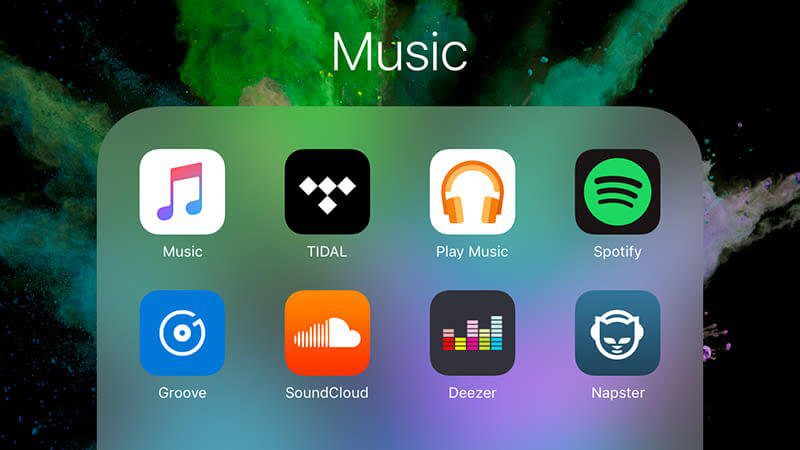
As streaming platforms, such as Spotify, which continues to reign supreme in 2023 with a dominant market share, reached saturation point a long time ago, independent artists have a seemingly impossible task ahead of them if they want to hit the ground running with their new releases and become popular playlist staples.

Perceptibly, battling it out on the streaming platforms themselves has become futile. New uploads are just a drop in the ocean, and it is enough to make the era of indie landfill in the 2000s and 2010s seem like a euphonic utopia of opportunity. It is no surprise that given that we thought music was derivative then, we are positively dejected by the prospect of an industry where millions of banal hits pile onto the airwaves each year.

So, what’s the remedy?

It may be the case that streaming platforms are proliferated by hack hobby musicians, and there isn’t a lot that can be done to prevent their access to streaming platforms. But for professional musicians worth their salt, there is everything left to gain in the industry. Well, relatively. New up-and-coming artists who have any true staying power in the charts have become sonic unicorns. Especially with the disappearing phenomenon of the mainstream music industry, but great music, which is marketed as masterfully as it was made, still has a fighting chance. Especially for artists willing to harness fan power.

Marketing your music outside of streaming platforms has become crucial to making an impression. Or at least achieving streaming stats and monthly listening figures that don’t want to make you throw the towel in. If you’re searching for the average number of followers, monthly listeners, or streams you need to be regarded as a success in the industry, you might as well be looking for the average length of a piece of string. There is no fixed number that you can achieve that will signify that you’re a success – unless you’re Bad Bunny, Taylor Swift, Drake, or the Weeknd, that is.

Streaming stats boil down to several factors. From whether your genre or style thrives on streaming platforms to how much money you throw at a pre-release campaign. It isn’t always a case of the best artists being the ones to send their streaming stats through the roof. Therefore, streaming stats aren’t yardsticks you should use to determine your worth as an artist.

This article will highlight up-to-date streaming platform stats to show you what you are up against as an independent artist, before suggesting some of the ways you can ensure your new releases rack up the streams and garner fans who will support you away from streaming platforms – which is where the real revenue streams will start to flow.

2023 Music Streaming Stats

To conquer your enemy, it pays (in this instance, $0.003 – $0.005 per stream on average) to know them. To understand the music streaming market in 2023, we have collated a list of streaming platform stats:

  • 10,000 – 50,000 monthly listeners will help you earn $100 – $600 each month.
  • The Weeknd and Taylor Swift are the only artists to break the 100 million monthly listeners mark on Spotify with 106.89 and 100.91 monthly listeners, respectively.
  • Ed Sheeran and Ariana Grande are the most followed artists on Spotify with 115.03 and 93.76 followers, respectively.
  • As of September 2023, Spotify holds music from 11 million artists; their music is listened to by 551 million active monthly listeners.
  • The rate of Spotify uploads continues to soar in 2023, with an average upload rate of 120,000 per day.
  • You would need 625 million subscription streams or 1.875 billion free streams to achieve gold certification on streaming platforms alone. Which is infinitely higher than the 500,000 album or single sales you would need away from streaming platforms.

How to Increase Streams on Independent Releases

When it comes to streaming platform stats, remember that everything is relative; your milestones should always be set based on your current standing in the music industry and what is possible based on your marketing budget. By setting attainable instead of lofty and ‘in a perfect world’ goals, you will have something to push for and celebrate to achieve.

Here are some of the best ways to maximise the success of your singles, EPs, and albums across streaming platforms:

  1. Value user-generated playlists as much as Spotify-curated playlists. Read our guide to getting playlisted here.
  2. Start marketing your new releases and pushing your pre-save links across all your social media accounts six weeks ahead of the release date and create unique content to make the countdown interesting.
  3. Collaborate with artists who already have a strong presence on streaming platforms or partner up by curating your own playlists.
  4. If you have a strong enough social media presence, consider paid advertisements on Facebook and Instagram.
  5. Link up with pluggers, and promoters who have a track record in maximising streams.

–

For more inside views into the music industry and tips on how to take your music marketing campaigns to the next level, keep following our blog, or get in touch for one-to-one sessions with our award-winning A&R team.

Of course, you can always boost your streaming stats by submitting your demo to our top 10 UK music blog, which is heavily frequented by staunch music fans and industry figureheads, who are always scouting for fresh talent.

Article by Amelia Vandergast

The History of Rap Music

In 2017, hip hop and RnB finally took over rock music as the most popular genre. It is impossible to imagine our culture sans rap and hip hop in 2022. Yet, the genre which became synonymous with gang violence in the 90s wasn’t always so widely accepted in Western Culture. For fairly obvious reasons.

The History of Rap Music

Most explanations of what is rap music history start with DJ Kool Herc, who made waves when he used two turntables to create loops to extend the instrumental section of a mix in the 70s.

When DJ Kool Herc’s mixed beats became a hit, he allowed Coke La Rock to compere his events, which led to him rapping over DJ Kool Herc’s beats, and so hip hop, as we commonly regard it, was born, but the history of rap goes even further back than that.

While some may believe that it all started in the Bronx, in reality, it began in West Africa centuries earlier. West Africa had Griots, AKA historians, that told rhythmic stories over a simple drumbeat; their stories would mostly revolve around their respective villages, and Caribbean folk music wasn’t worlds away from the rhythmic West African stories.

Rap music came to be defined as vocals that used spoken language, rhyme and rhythm while flowing to a beat. The flow, lyrical context and speed all became important signifiers of rap music. After the hype over Herc spread through the Bronx like wildfire, plenty of other artists stepped up to the plate to push the cultural shift even further.

Kurtis Blow was the first rap artist to be signed to Mercury Records in 1979, and during the following year, Sugar Hill Gang and The Fatback Band both entered the Billboard top 40.


During the 80s, party hip hop became a major part of the music industry. This was shortly before hip hop became regarded as a powerful tool for social change, a way to call for accountability and to share socially conscious intellect.

The golden era of hip hop dawned in the mid-80s; names that defined the era included Public Enemy, Rakim, Run D.M.C., and A Tribe Called Quest. Rap music became harder, faster, denser and better produced during the mid-80s. It also got infinitely grittier, thanks to the likes of West Coast Rappers, such as ICE-T and N.W.A., who were keen to share their controversial content to shine a light on the darkest corners of urban life.

In the 90s, the battle raged between West Coast and East Coast rap artists who fought it out for dominance in the charts and on the streets – it is unlikely that any two artists will ever come close to the rivalry between Biggy and Tupac.

Thankfully, the friction in the hip hop industry started to fade when the likes of Snoop Dogg and Jay Z came onto the scene in the 90s to help rap artists shed their bad collective reputation.

Female rap artists finally started to breakthrough in the 90s too. Yo-Yo, Queen Latifa and MC Lyte proved that women have as much a place in the genre – which is just as true today with icons such as Nikki Minaj and Cardi B reigning supreme on the rap charts.

Post-2000, rap music is as diverse as it is popular. Old school fans may not make much of new wave trap trends, but artists, such as Lip Peep and Lil Xan, deserve just as much of a place in rap history as any one of the 70s, 80s or 90s icons. Today, there are 22 subgenres of rap, including the marmite of rap, mumble rap, rap-rock, Crunk, drill, emo and horrorcore.

–

As important as it is to ask what is rap music history, it is just as crucial to keep your finger on the pulse when it comes to the future of hip hop and rap music. Take for example the stellar tracks that transpired as a result of the Black Lives Matter movement in 2020 and Spottie Wifi making history as the first-ever Cryptopunk rapper in 2021. Rap music blogs are the best way to stay engaged with the luminary up and coming artists that are bringing in the future of rap and hip hop.

Abandon The Fall Release Their Second Hit of High-Octane Alt Rock with “This Hurt”

Following on from the success of their debut single “Enemy”, Abandon The Fall has orchestrated yet another masterfully dark Alt Rock single with “This Hurt”.

The progressive single kicks off with melodiously atmospheric energy before steadily picking up emotive momentum. You’d expect to be immersed in an explosive chorus when it hits, yet, Abandon The Fall seem to be in the habit of subverting your aural expectations.

What I will always admire most about Abandon The Fall is their commitment to creating music which doesn’t assimilate what has already been done to death a million times before. The raw and strained vocals run through with distinction and actually offer real human intrinsic emotion instead of reaching for the perfect polished screams.

You can check out Abandon The Fall’s latest single This Hurt by heading over to Spotify now.

Review by Amelia Vandergast

D.Ni.L – Glue: Textured Guitars, Rap Metal Vocals… What More Do You Want?

It’s official. Rap Metal crossovers are officially my favourite infusion of sounds and D.Ni.L are now up there with my favourite genre benders. Their latest single Glue is an unfaltering, transcendently raucous mix of sounds you’d associate with Muse, Radiohead and Harsh Hip Hop artists such as Run DMC & Public Enemy.

The track progresses from a Indie Trap introduction before being hit by the fuzzy reverb from the guitar which creates the perfect cacophony of sound for the Rap Metal Vocals to chase whilst the backing vocals create a creeping resonance through Thom York style echoing harmoniously builds texture to the sound. The amount of progression and experimentation that is contained in this 3 minute track is insane. There’s no better word for it.

If you’re a fan of the experimental, you can check out the official music video to the colossal hit Glue by D.Ni.L which was released on April 27th 2018 on YouTube.

Make sure to subscribe to D.Ni.L’s channel, Glue is just the first single to be released off their upcoming album Boy Inside.

Review by Amelia Vandergast